
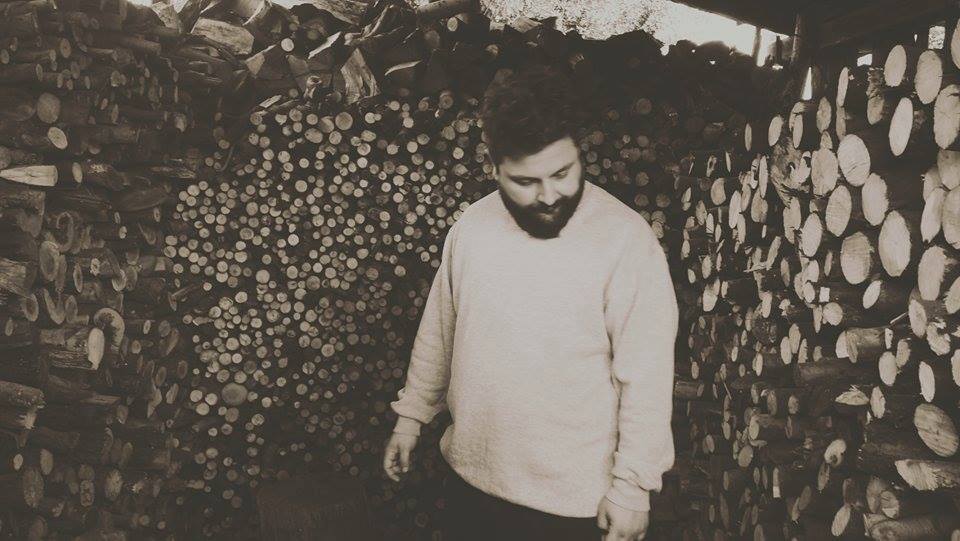
There are artists who compose, and then there are those who listen; not to melodies, but to the quiet, unlit spaces between them. Gert Stockmans stands firmly among the latter. Under the monikers Samatha and Mara, his music doesn’t simply unfold; it breathes, expands, contracts, and reveals itself with the patience of something ancient remembering its own origin. Born from the stark silence that followed long hospital shifts during the first wave of the pandemic, his sound emerged not as art, but as refuge; a soft, trembling bridge between exhaustion and presence.
To enter his world is to step into a terrain where drone, minimalism, and emotional resonance converge, where stillness carries texture, and darkness carries honesty. His new dual release, ‘Wanderer of Light’ and ‘Seeker of Shadows’, doesn’t present a narrative of opposition, but a dialogue: one track searching for luminosity that remains after suffering, the other tracing the gravity of what that light must push against. They linger in that delicate threshold where clarity meets doubt, where the human pulse flickers inside vast sonic landscapes.
Speaking with Stockmans is less like interviewing a musician and more like conversing with someone who has learned to translate introspection into tone. His compositions are not escapes from the self, they are invitations to sit within it, unguarded, unresisted, and unembellished. In his work, sound is not decoration. It is recognition.
What follows is a conversation about silence, tension, healing, illusion, and the quiet ritual of returning, again and again, to the spaces where light and shadow learn to coexist.
When did your search for meaning through sound begin? Was there a particular moment when music became more than a medium, when it turned into a language of introspection?
It began almost unintentionally. During the first wave of the COVID pandemic, I was working long shifts at the hospital and returning home to a silence that felt both heavy and necessary. I bought a small MIDI keyboard, a modest tool that somehow opened an entire world. The first drones I created weren’t meant to be music; they were more like an act of meditation in sound, a way to soften the noise of the day. When I realized I could translate my emotions into music that might also touch others, I decided to share my first work with the world.

What usually sparks your creative process? Do you wait for silence to speak first, or do you provoke it into revealing something?
I don’t have a dedicated studio space at home, so I always start a session by choosing and installing the gear I am going to use that day. So my setup is never the same, which keeps things fresh. Often, a single sound sparks my creativity. Sometimes I feel like I’m just tracing what’s already there, letting the piece reveal itself gradually. The moment I try to control it too much, it slips away. The beauty lies in patience, in letting sound unfold at its own pace.
What inspired you to create the two new tracks, ‘Wanderer of Light’ and ‘Seeker of Shadows’? Were they born from the same emotion, or from opposing forces within you?
They feel like two sides of the same coin. ‘Wanderer of Light’ emerged from the slow realization that even after long darkness, something soft and luminous still exists within reach. ‘Seeker of Shadows’, on the other hand, came from confronting what that light pushes against. It carries the weight, the friction, the pull of doubt. Both tracks were created within months of each other, and together they illustrate that inner movement, between surrender and resistance, clarity and confusion.

Samatha and Mara seem to exist as mirror images, one seeking stillness, the other chaos. How do you personally navigate between these two inner landscapes without losing balance?
I’ve learned to see them as complementary rather than opposing. There’s stillness inside chaos, and chaos hidden within stillness. It’s like breathing in and out, a continuous rhythm of emotion. I try to maintain that balance through walks in nature, yoga practice, and listening to music.
“Light remembering it was once darkness” feels like an underlying theme in your music. Do you believe every sense of calm hides an unspoken storm?
Yes, I think calmness is never absolute. It’s not the absence of tension, but the understanding of it. The quiet becomes meaningful only because it knows what noise feels like.
Your compositions feel less like soundtracks and more like states of being. When you compose, do you build a world for yourself to inhabit, or do you simply document the one already living inside you?
I think I’ll document what’s already inside. But in doing so, I inevitably build a new world. Each piece becomes a kind of mirror: it reflects an emotion, then transforms it.
When I listen back, I often hear something I didn’t consciously intend. It’s as if the music understands me more clearly than I understand myself.

In ‘Wanderer of Light,’ the music feels like a breath expanding toward transcendence. How do you translate such intangible sensations — growth, awakening, illumination — into sound?
I work through intuition and restraint. I try to avoid adding too much and instead focus on what remains. Growth isn’t always about building layers; sometimes it’s about giving sound space to breathe. I follow the natural evolution of tone, the subtle shifts in texture, and allow them to reach their own horizon. If I sense expansion, it’s usually because I’ve stopped trying to control it.
Conversely, ‘Seeker of Shadows’ feels denser, almost physical, as if the darkness has weight. What does darkness mean to you, not metaphorically, but emotionally?
Darkness is something I carry on a psychological level, and making music is how I process it, how I give it form. In Mara, that darkness becomes tangible; it carries texture and pulse.
Emotionally, darkness represents honesty, the part of the self that doesn’t pretend to be healed.
The piano sound in ‘Wanderer of Light’ feels like a pulse of clarity through the drone’s heavy mist. Is that contrast between fragility and gravity a reflection of how you see human emotion?
Exactly. I think our emotions are rarely singular, even moments of peace have cracks, and within sorrow there’s often a strange beauty. The piano represents vulnerability. It’s the human element inside the larger, more abstract drone, a fragile voice trying to stay afloat within something vast.

With Mara, the boundaries between ambient, post-rock, and post-metal dissolve. Do you think genre is still a meaningful construct for artists who compose from emotional necessity rather than stylistic intention?
Genre is more like a lens than a rule. It helps listeners navigate, but for the artist, it can easily become a limitation. With Mara, I don’t think about categories. I follow emotion, not structure. When a sound demands weight, I let it be heavy. When it asks for space, I let it drift.
Buddhist mythology frames Mara as the tempter, the one who confronts you with illusion. Did you find yourself confronting personal illusions while creating this project?
Absolutely. Creating Mara felt like standing face to face with my own resistance: the doubts, fears, and self-imposed expectations that can quietly shape who we think we are.
I came to realize it wasn’t about defeating them, but about recognizing them. That awareness brings a kind of clarity and helps you understand your thoughts and behavior more honestly.
There’s an undeniable ritualistic feeling in the way the two tracks respond to each other. Was this dual release meant as a dialogue, a confession, or perhaps an exorcism?
Maybe all three. A dialogue between two sides of the same mind, a confession of what lies between them, and perhaps a small exorcism of silence itself.
I didn’t plan it that way, but when I listened back, the connection was obvious. It felt cyclical
— like a ritual of returning, again and again, to the same question: where does light end, and shadow begin?
How important is discomfort in your creative process? Can beauty truly exist without unease or friction?
Discomfort is essential. It sharpens awareness and keeps beauty from becoming ornamental. Without friction, art loses its pulse. In both Samatha and Mara, discomfort appears as tension: the moment before release, the breath held too long. That’s often where the most fragile kind of beauty hides.
Beyond music, what other passions shape your creative world? Are there daily rituals, books, or quiet obsessions that ground you when the sound becomes too vast?
As mentioned before, nature walks and yoga keep me grounded. These practices mirror what I try to do with sound: to observe without forcing, to find balance between emotions. They remind me that creation begins in presence.
If one of your compositions could inhabit a film, real or imaginary, what kind of world would unfold on screen? Would it be a story driven by silence, by decay, by transcendence?
It would be a meditative film, a quiet exploration of daily emotions told through nature and light. Rather than a traditional story, it would unfold through landscapes breathing, the sky changing, the simple passing of time. Silence, decay, and transcendence wouldn’t be opposites, but different shades of the same feeling.
Are there any non-musical artists who inhabit the same emotional or aesthetic frequency as you do? Whose work feels like a distant reflection of your own?
Mark Rothko’s work has always resonated with me, translating emotion into color, tone, and texture. His minimalism feels deeply human, almost meditative in its depth.
When listeners dive into your world, what do you hope they find in the silence between notes, in the spaces where sound dissolves and self-awareness begins?
I hope they find a moment of recognition of themselves. The silence between notes is where music truly happens; it’s where the listener becomes part of the piece.
If my sound can create even a brief sense of stillness or connection, then it has already spoken more than words ever could.

Follow Gert Stockmans/Samatha on:
Facebook | Instagram | Bandcamp

Nicolae Baldovin
Latest posts by Nicolae Baldovin (see all)
- WU-TANG Legend Ghostface Killah Sets Two Shows in Russia - October 23, 2026
- A Little Skin, a Little Sin, and a Lot of Chaos - October 19, 2026
- “The Disciple: A Wu-Tang Fable” Arrives on Netflix This October - October 15, 2026