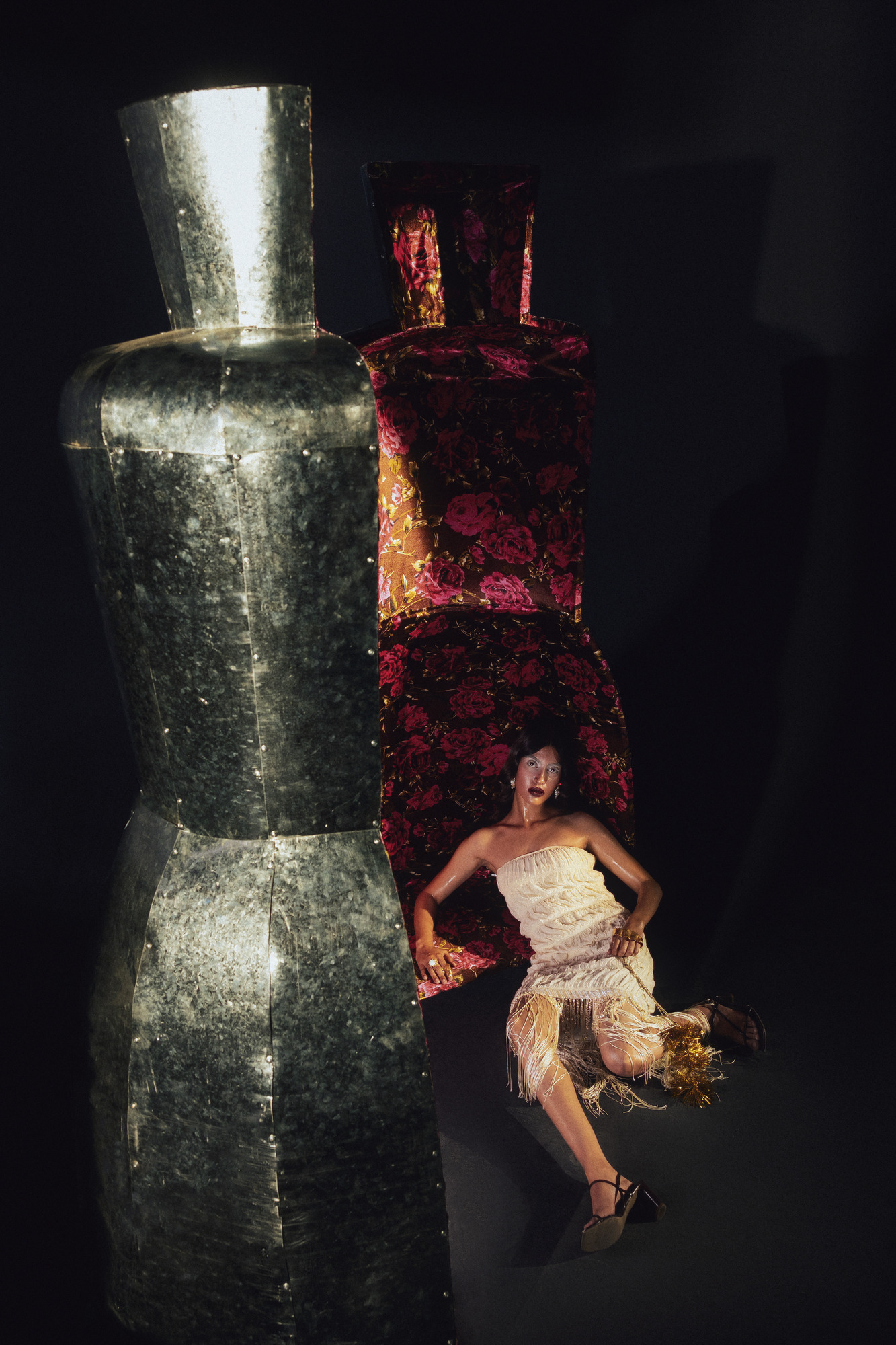
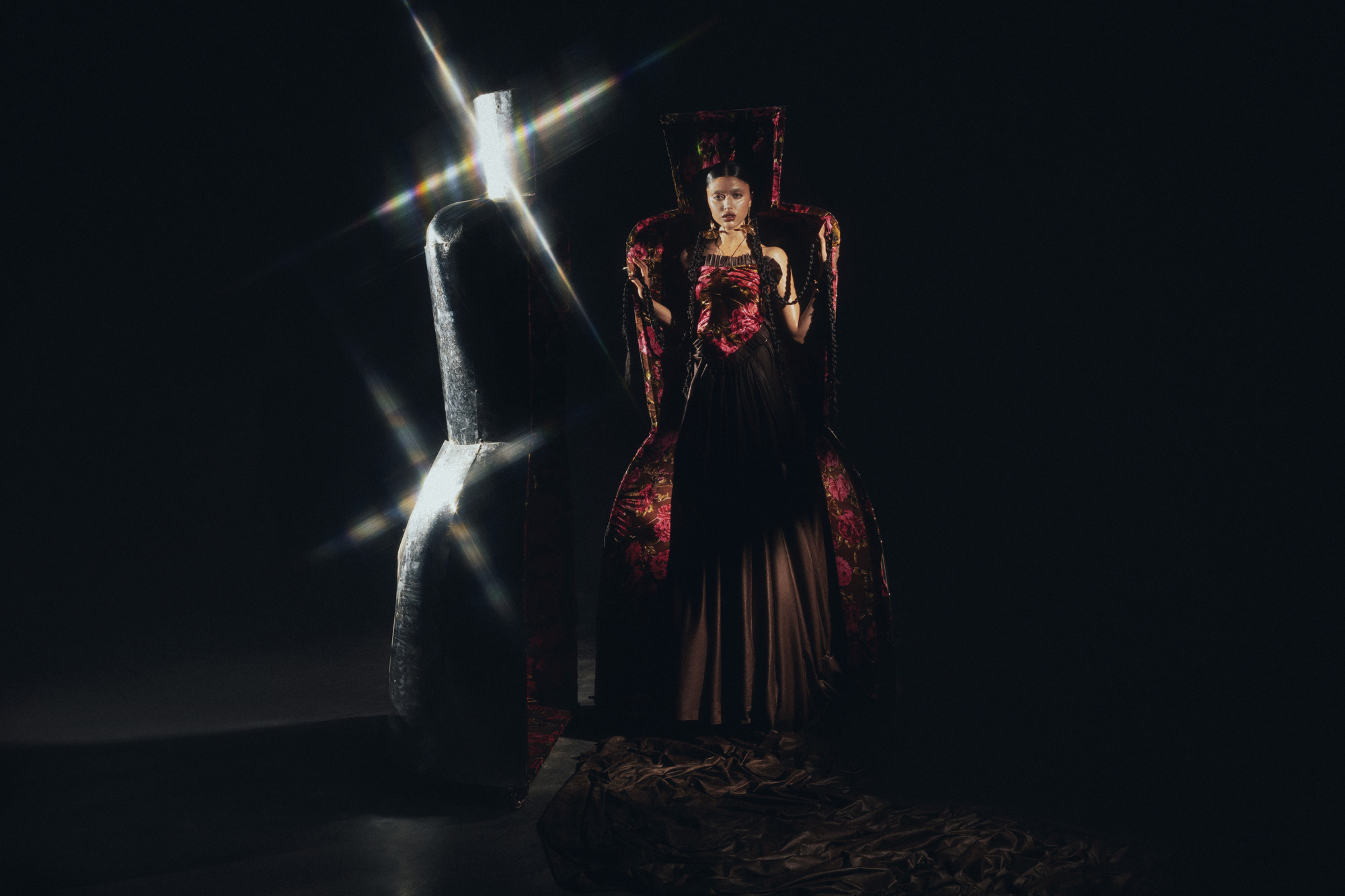
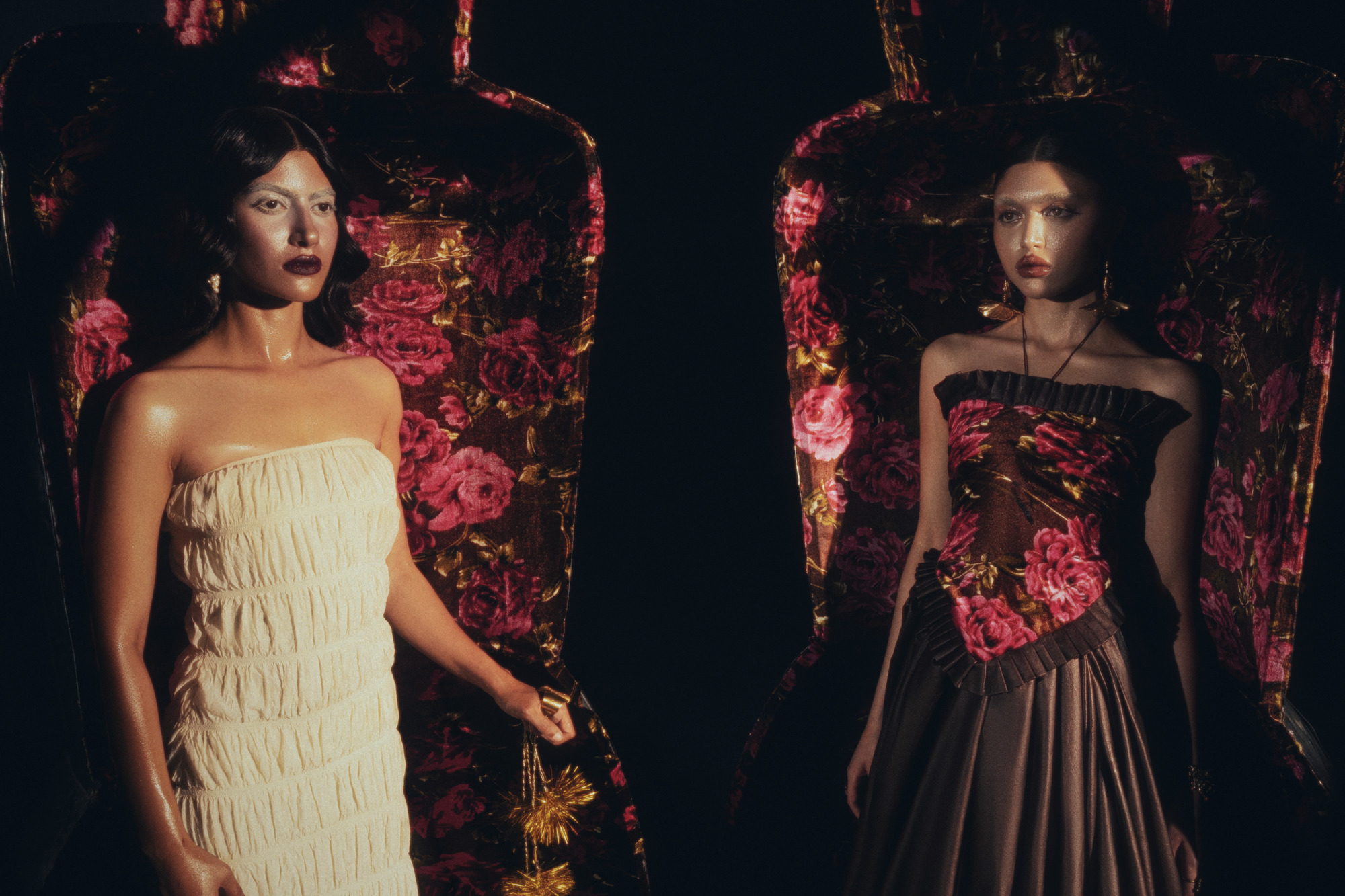
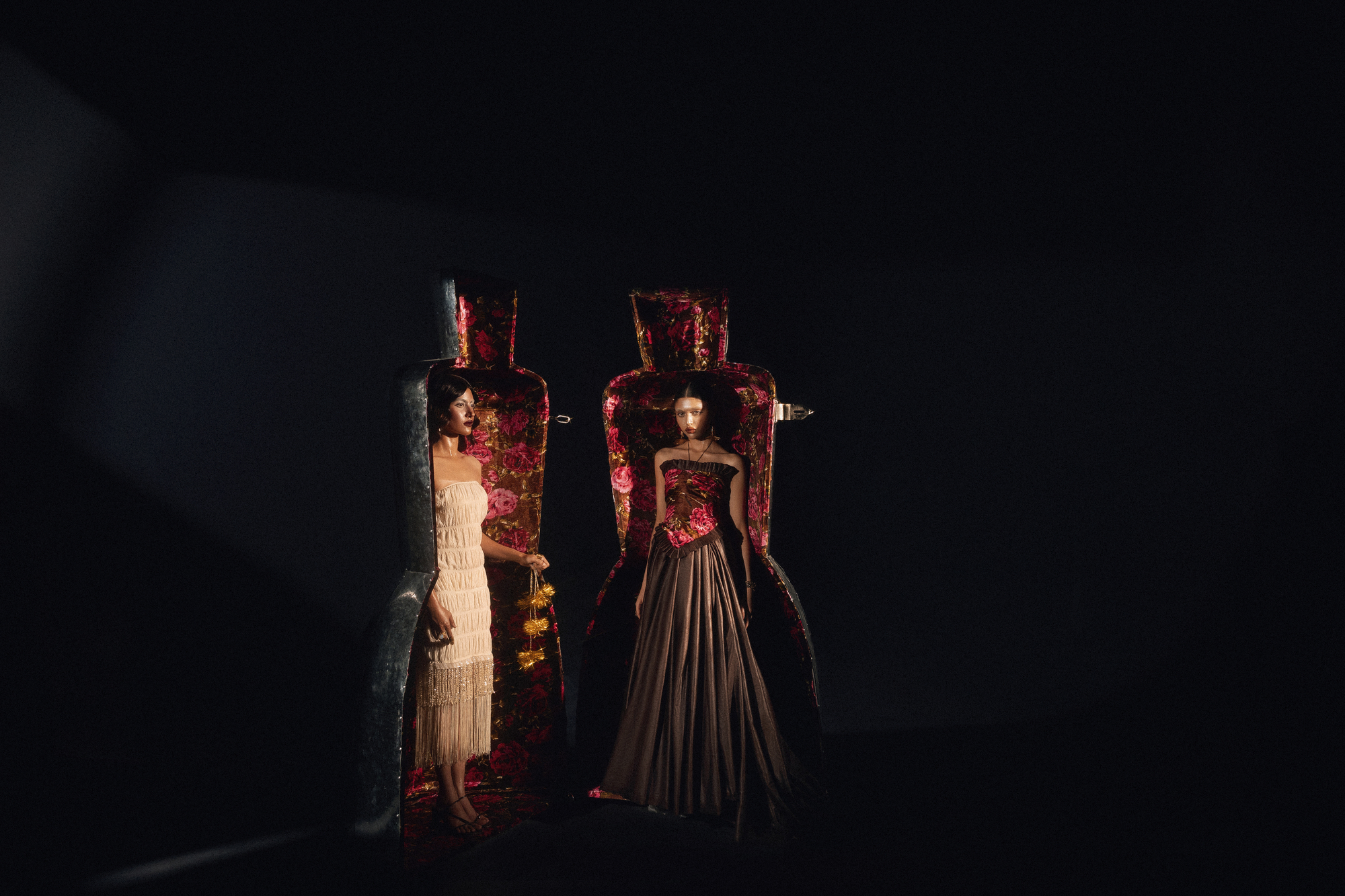
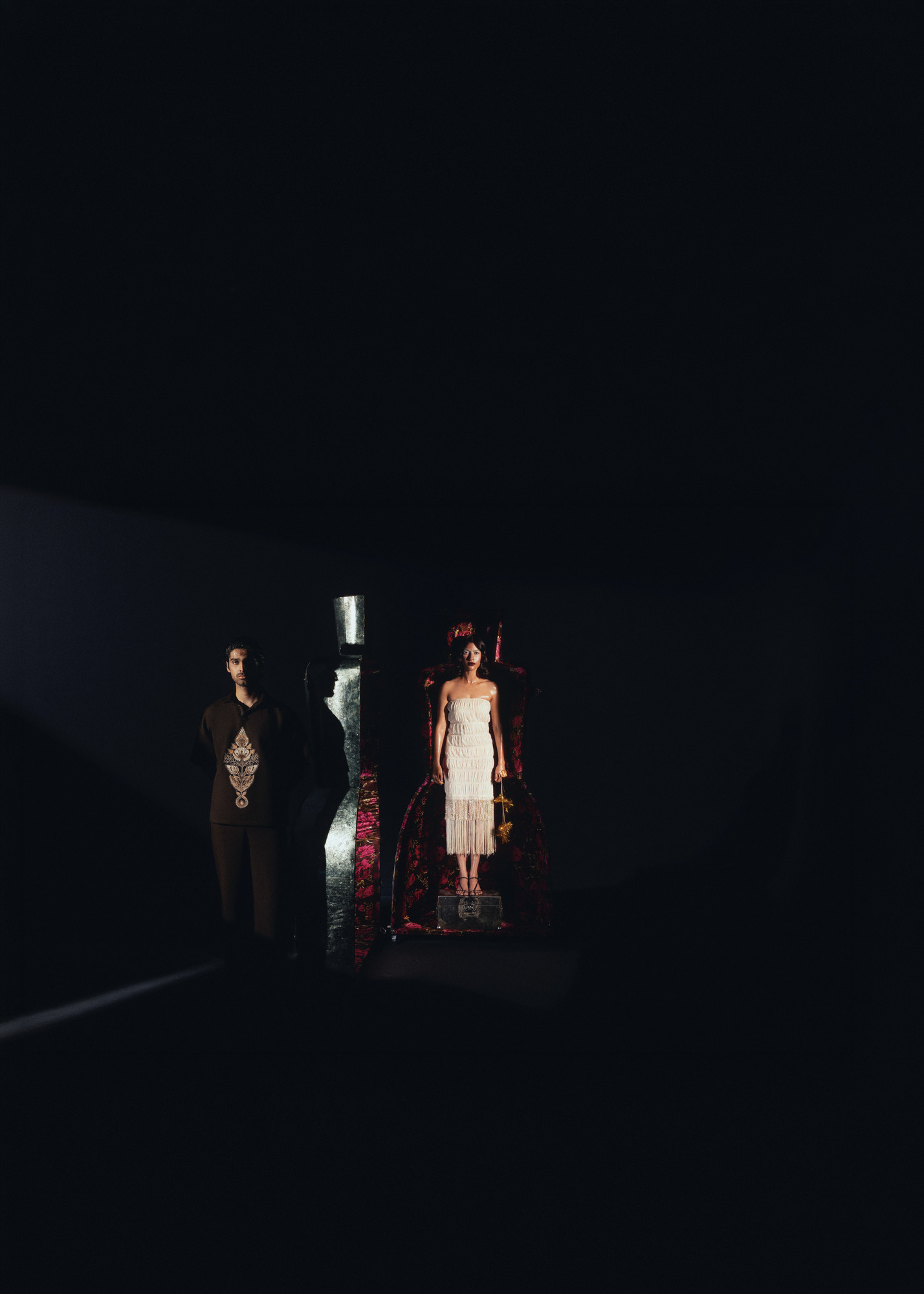
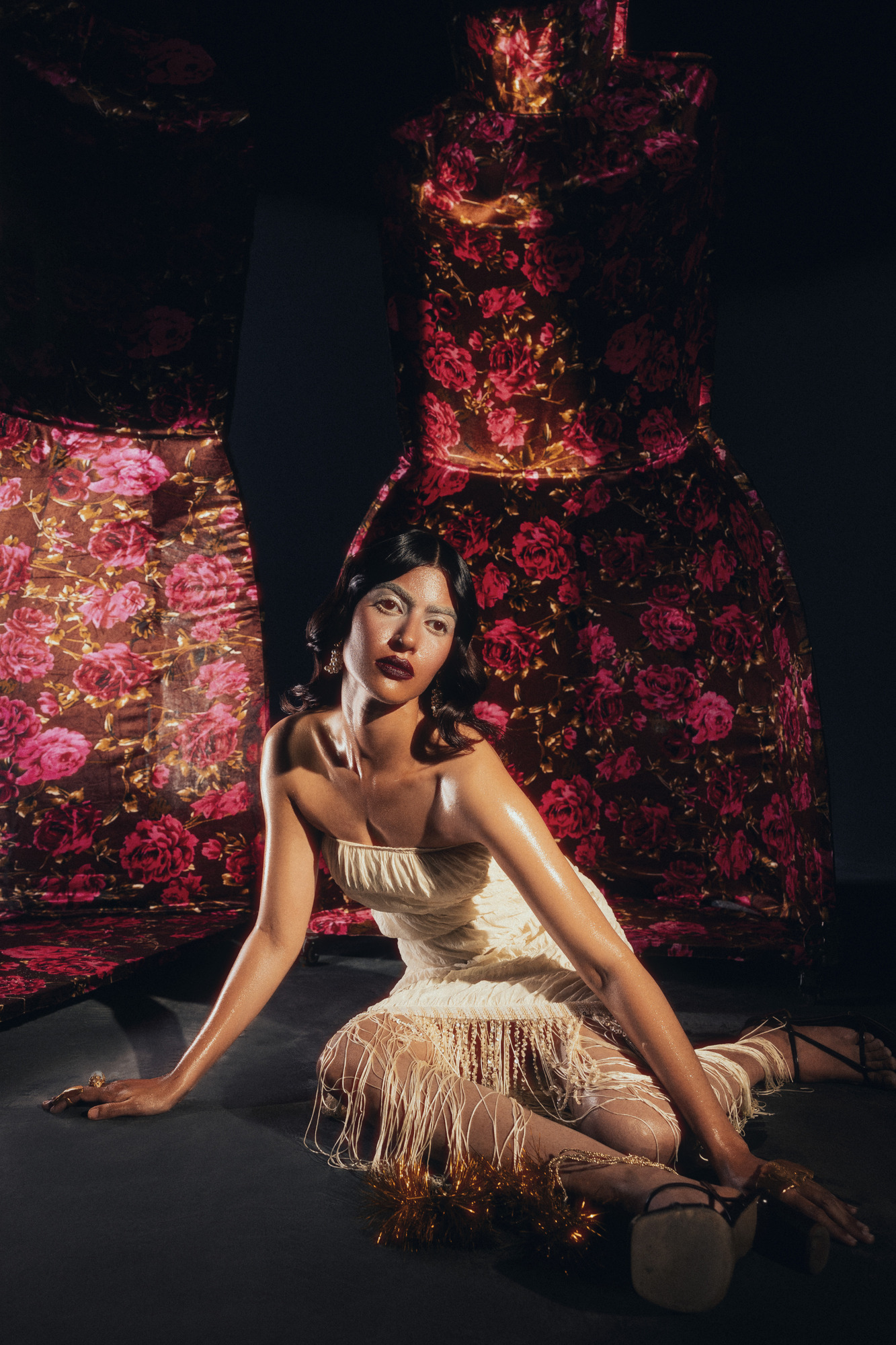
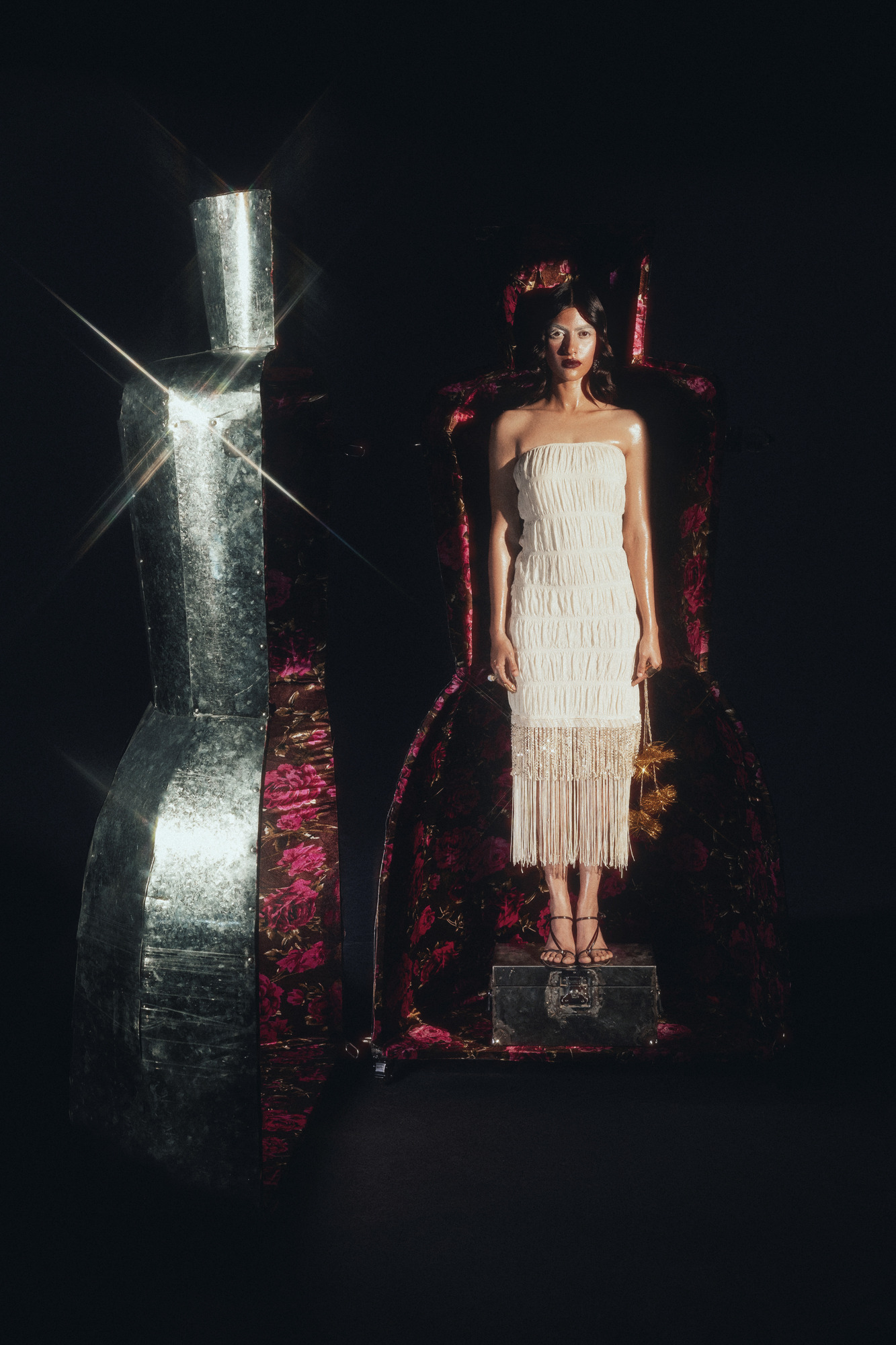
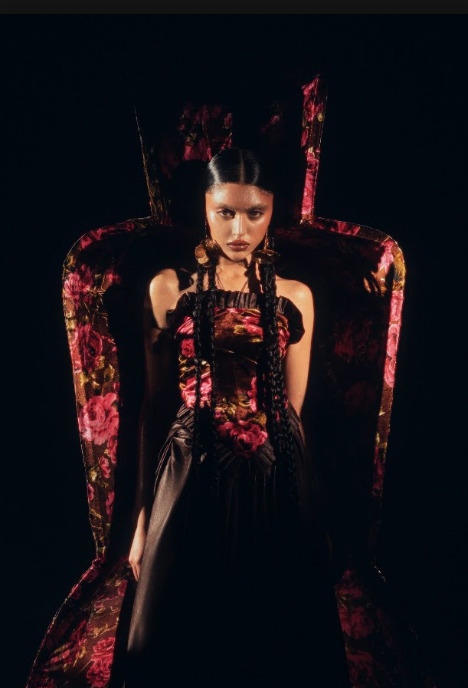
There is a moment in Collected XX’s new editorial where two headless silhouettes stand behind a seated woman like witnesses at a trial. They are shaped like trunks, the kind a family fills before a wedding, except they have grown shoulders, collars, the suggestion of a torso.
Draped in rose-printed velvet the colour of dried blood and old wine, they could pass for guests at a funeral, or figures waiting their turn to speak. The woman in front of them, dressed in a pale ruched slip, does not look at either. She looks somewhere past the camera, as though she has already had this conversation before.
That image is as close as fashion photography gets to an argument. For Nael Hafeez, the Lahore-based Creative Director behind Collected XX, clothing has always been a way of taking inherited things apart and seeing what remains.
A house built on unpicking things
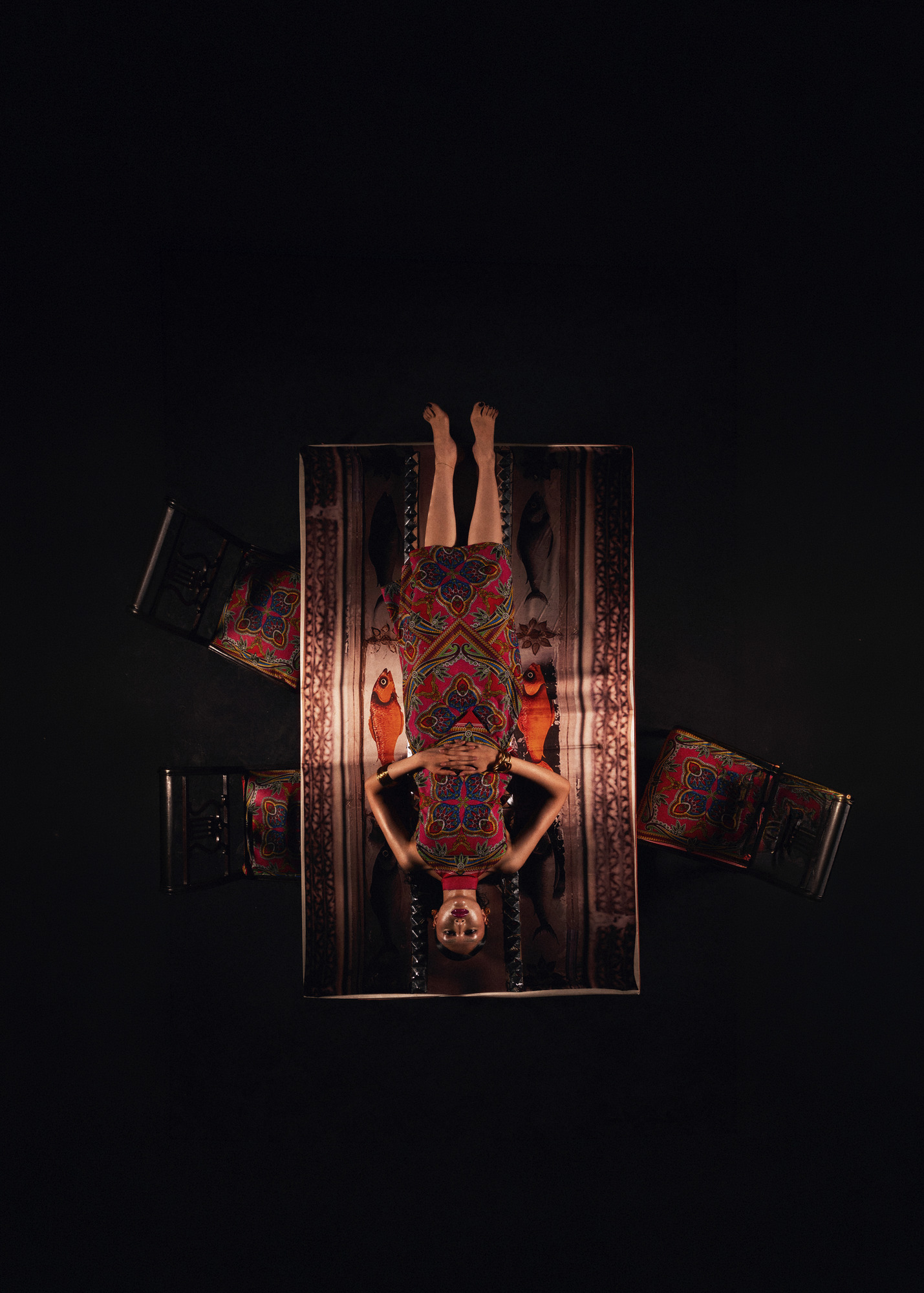
Collected XX begins with material rather than a blank page. Its practice is rooted in textile preservation and in ongoing collaborations with artisans across South Punjab and Sindh, working with weaving and embroidery techniques shaped by generations of domestic and ceremonial use.
But preservation here does not mean keeping things untouched. Fabrics and techniques associated with wedding trousseaux, ceremonial dress or ordinary household use are pulled out of their familiar settings and rebuilt through avant-garde, gender-neutral tailoring. Something recognizable survives, but rarely in the form in which it arrived.
The approach has taken Collected XX to Panorama Mundi in Paris, The Canvas in New York and Atelier Three in the UK. More interesting than the geography, though, is what travels with the clothes: South Asian craft treated neither as ornament nor as a visual reference to be borrowed, but as a material language still capable of changing.
For Spring/Summer 2026, Re/form pushes that language somewhere more uncomfortable.
A poem written against silence
One of the collection’s points of departure is Kishwar Naheed’s 1990 poem We Sinful Women (Hum Gunahgar Auratein), a landmark work by the Pakistani Urdu poet whose writing confronted the political and social restrictions imposed on women.
Naheed takes the vocabulary of shame and turns it inside out. The women who speak too loudly, refuse obedience or decline to lower their eyes become the ones speaking in the poem.
Re/form picks up that refusal decades later. The question running beneath the collection is a simple and uncomfortable one: how much has actually changed? Perhaps the mechanisms have become quieter. Perhaps control has learned the language of choice, and restriction has acquired softer surfaces. Sometimes that question appears in the silhouette. Elsewhere, it is buried in the material itself.
The trunk, the trial, the veil
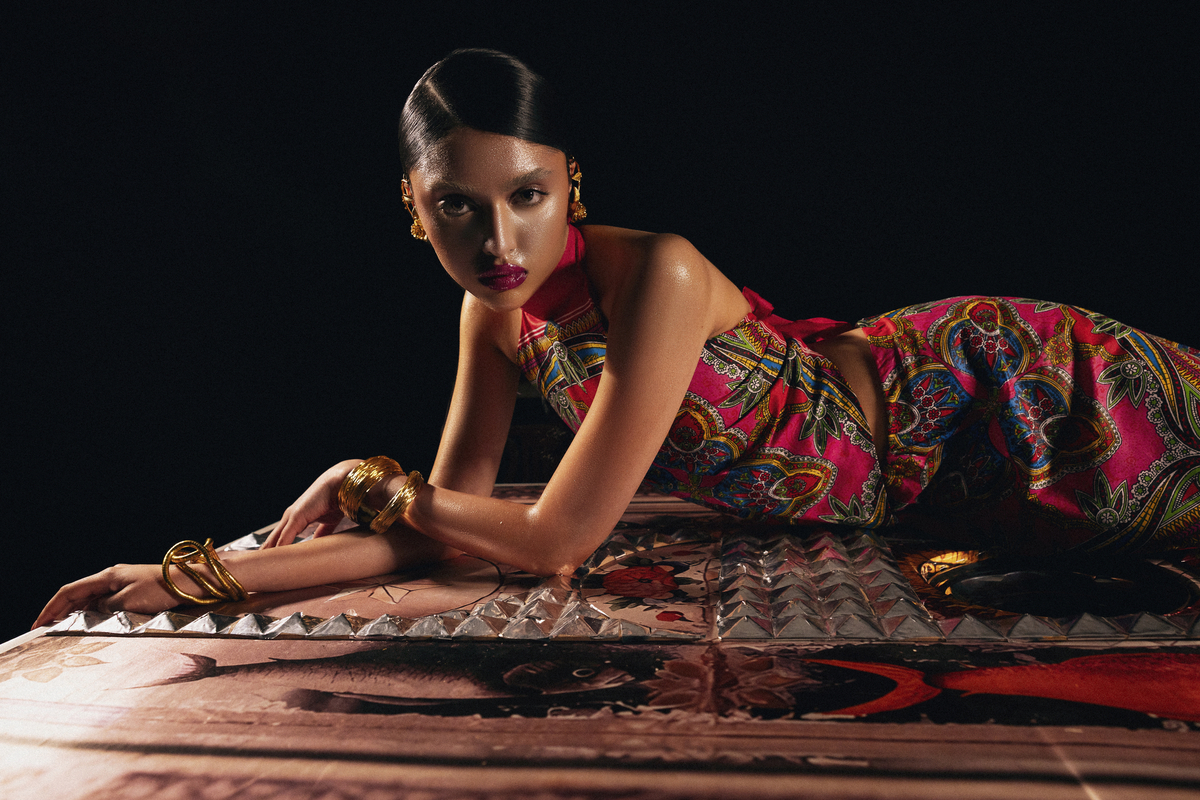
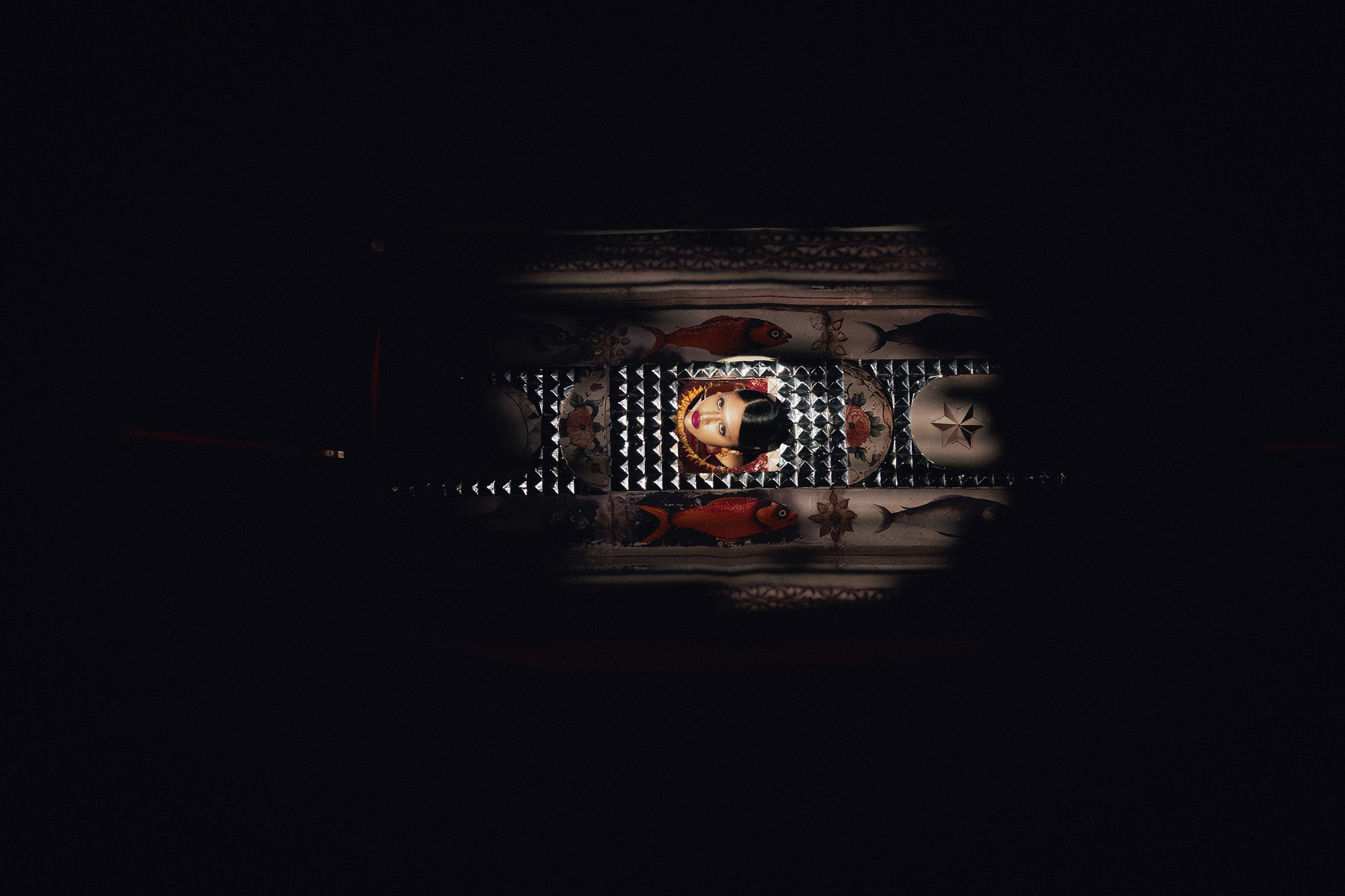
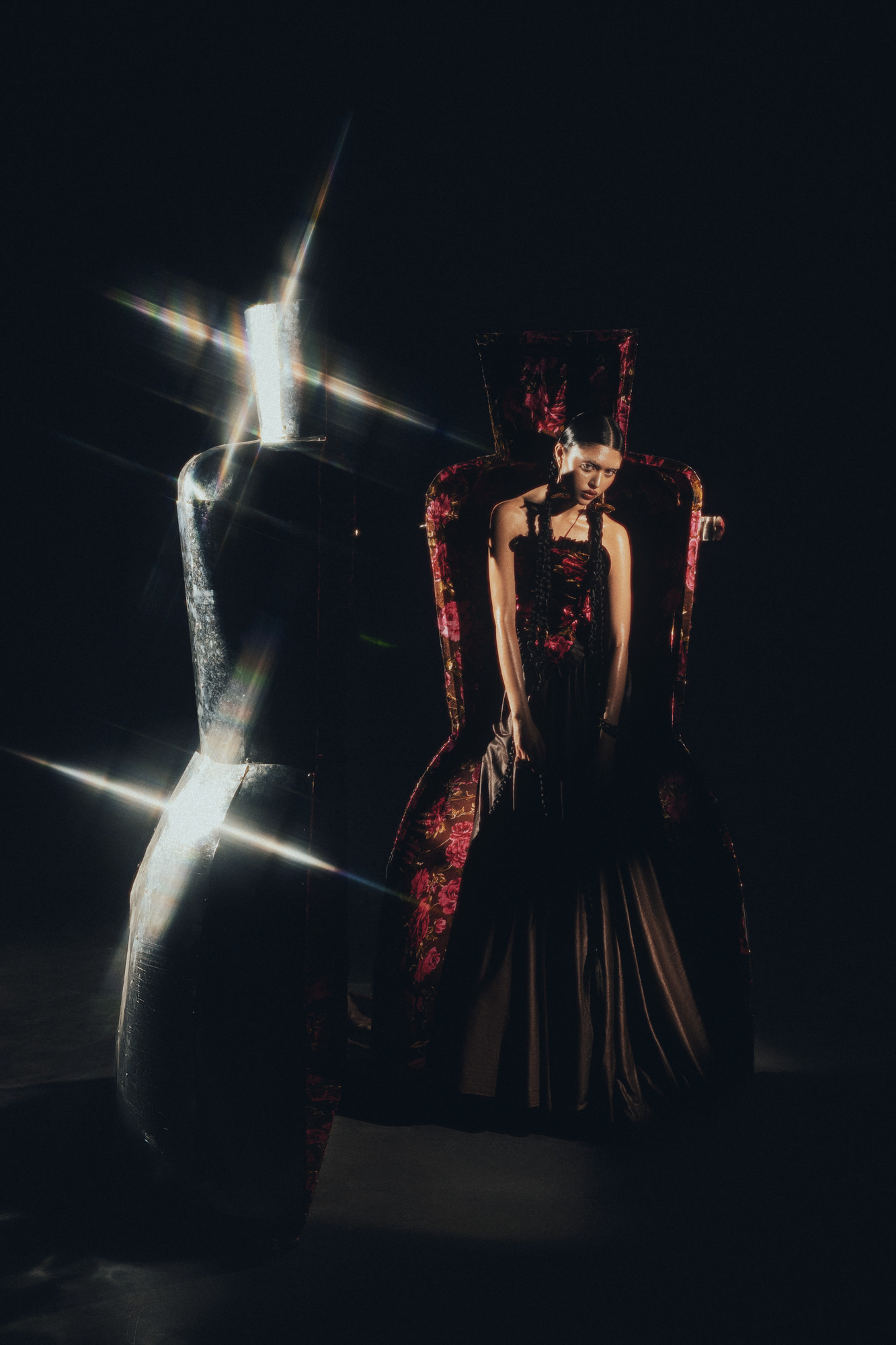
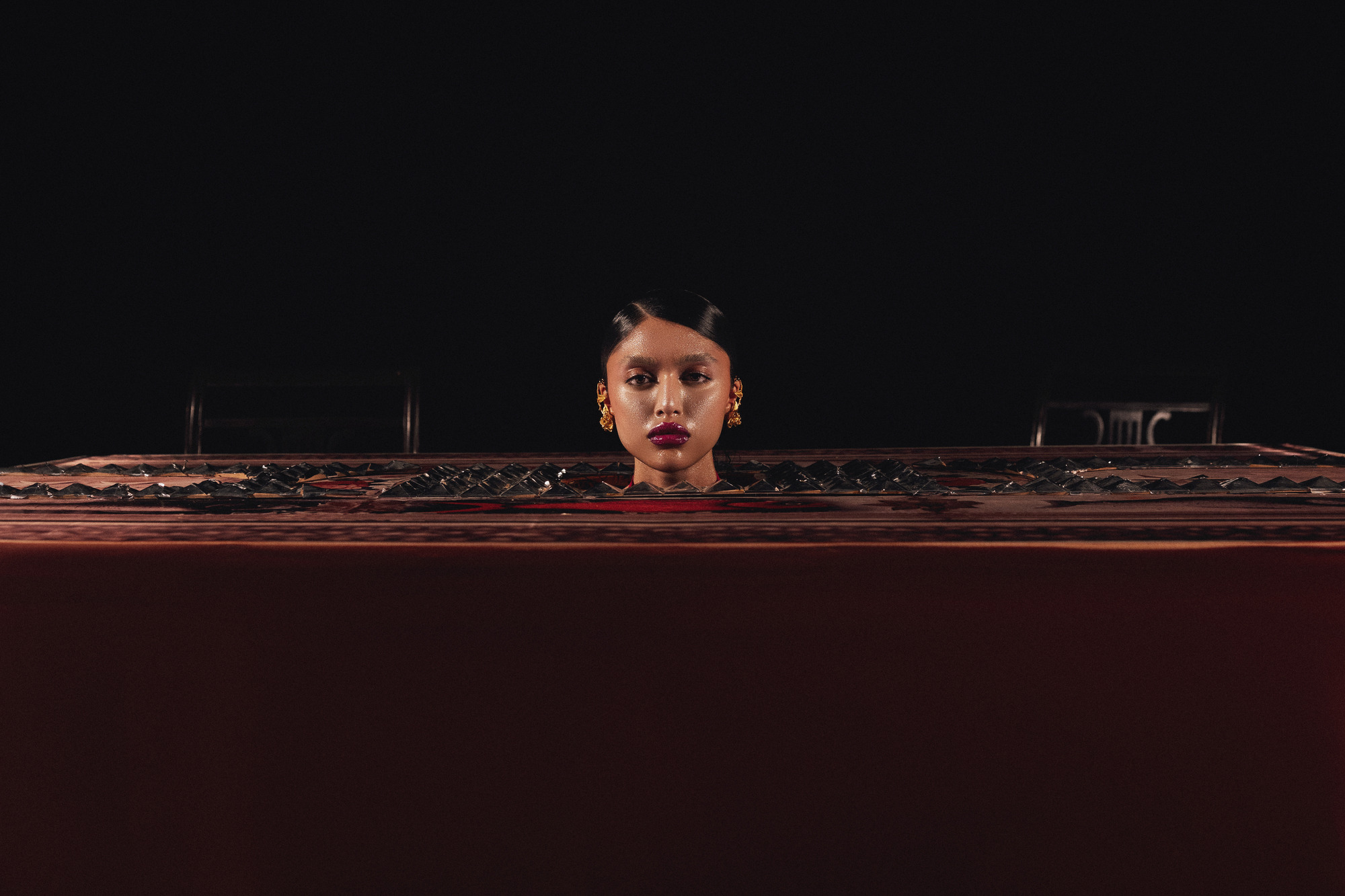
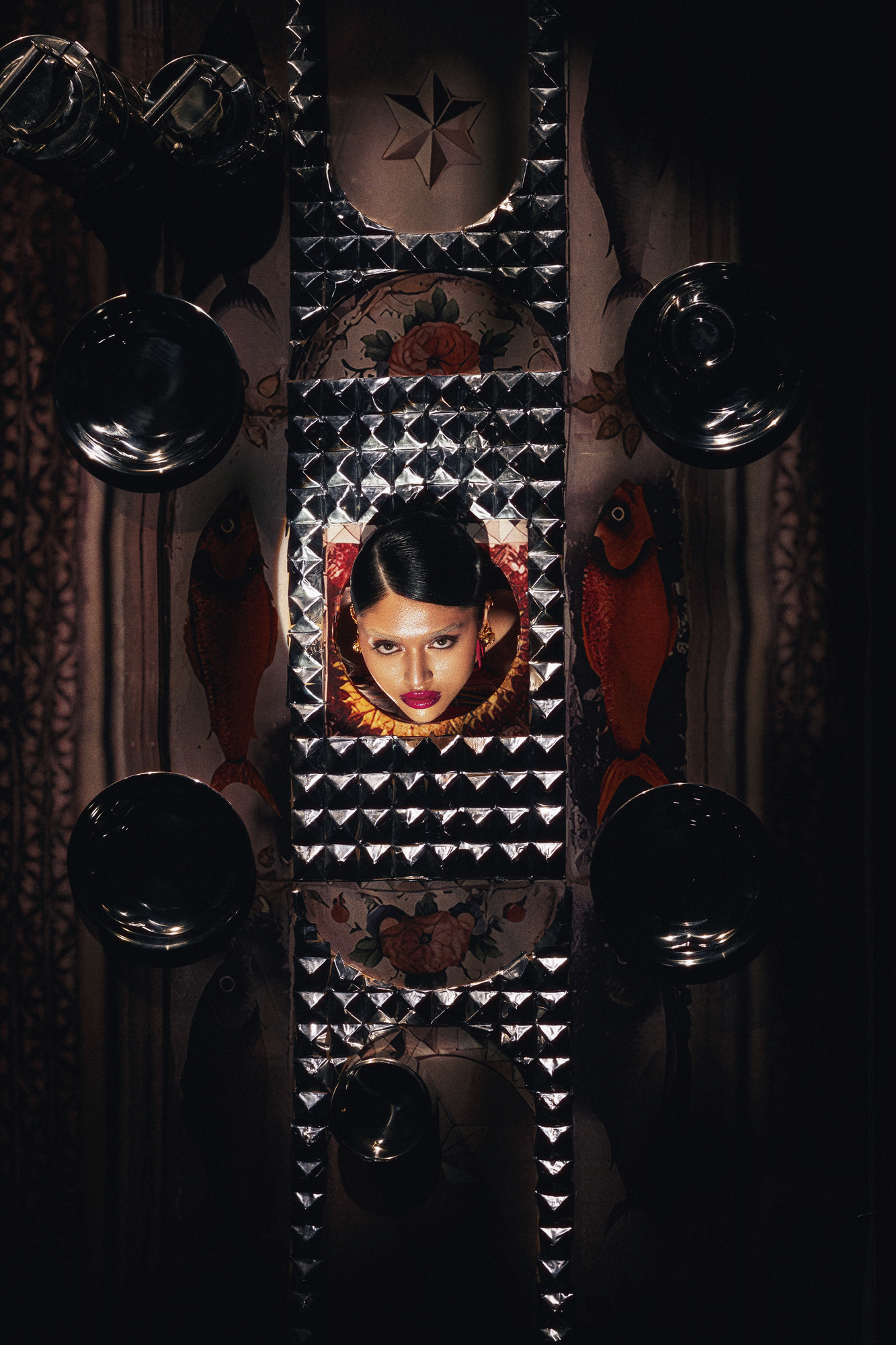
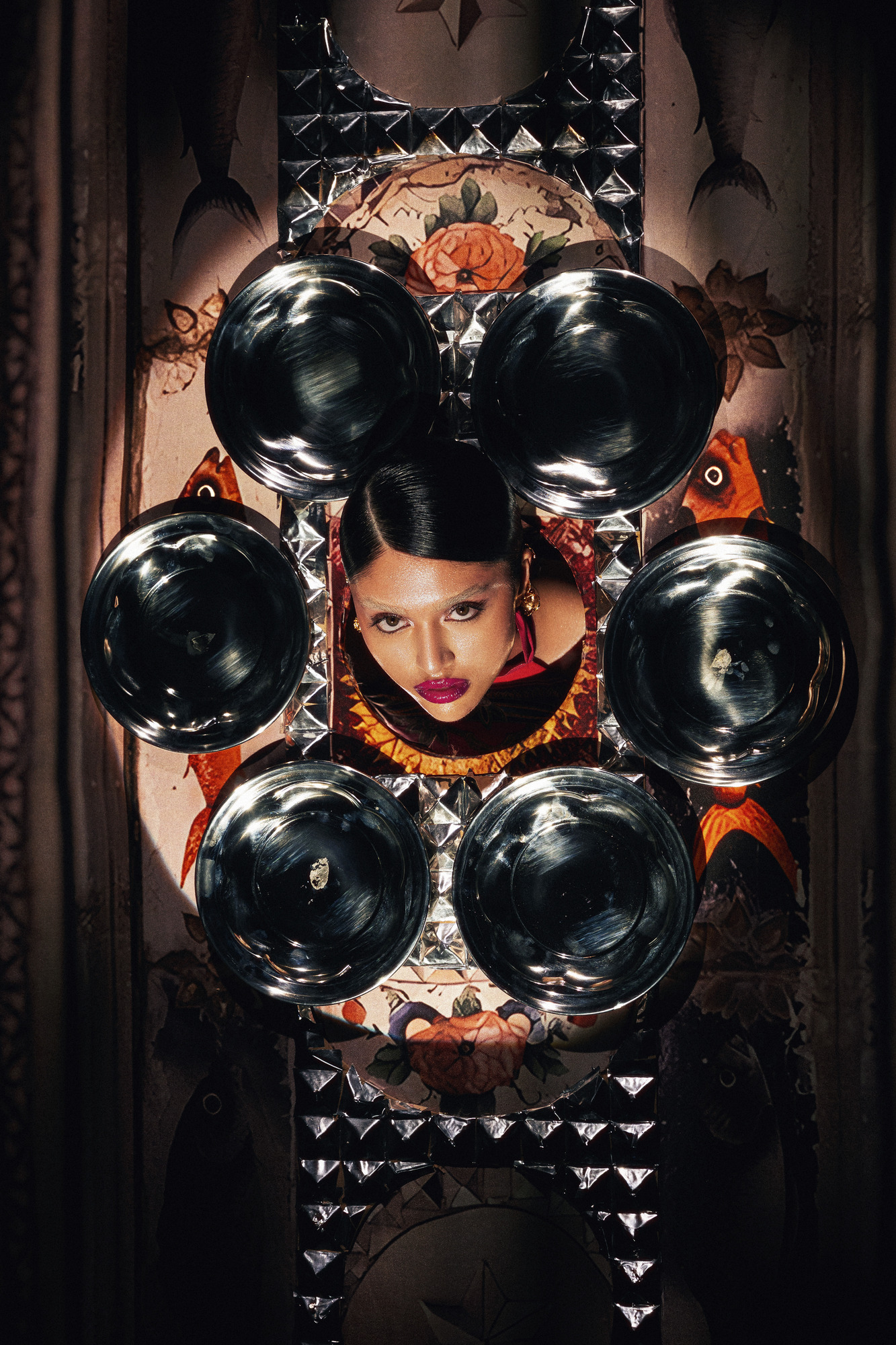
The pattie, the dowry trunk traditionally filled before a woman leaves her family home, appears repeatedly throughout the editorial. Except here it refuses to remain furniture.
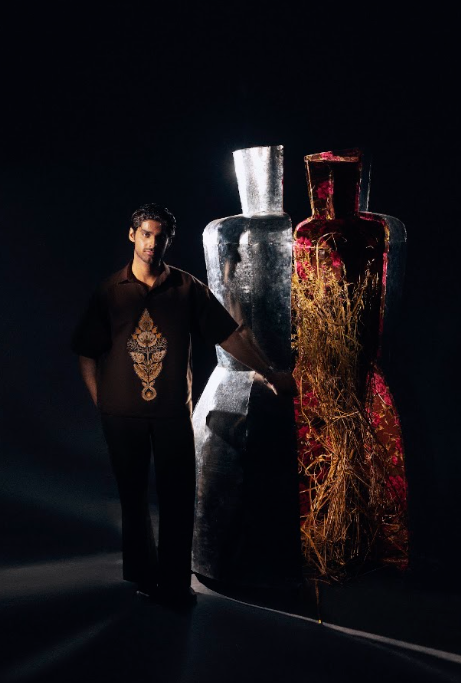
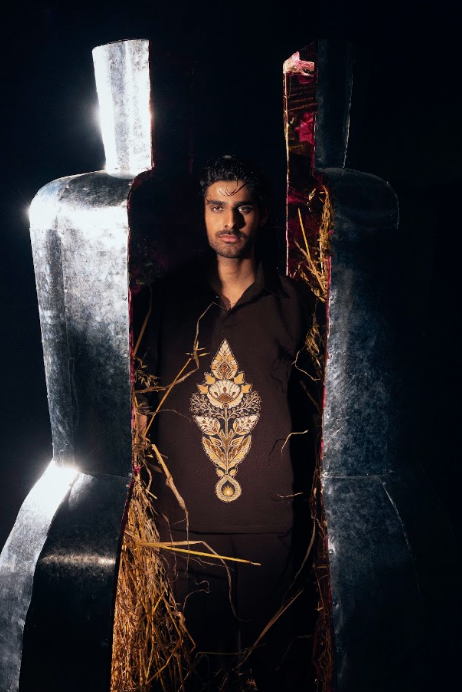
It grows shoulders, acquires a waist, stands upright. Glossy and rigid, sometimes upholstered in floral velvet, these trunk-like forms sit somewhere between armour, body and inheritance. Their emptiness is almost as noticeable as their decoration.
In one image, raw harvest sacking and loose straw spill from a torso-shaped structure beside a model wearing an embroidered shirt. Domestic material, ceremonial codes and the human figure collapse into one another. The trunk begins to feel less like something used to carry possessions and more like something capable of carrying expectation.
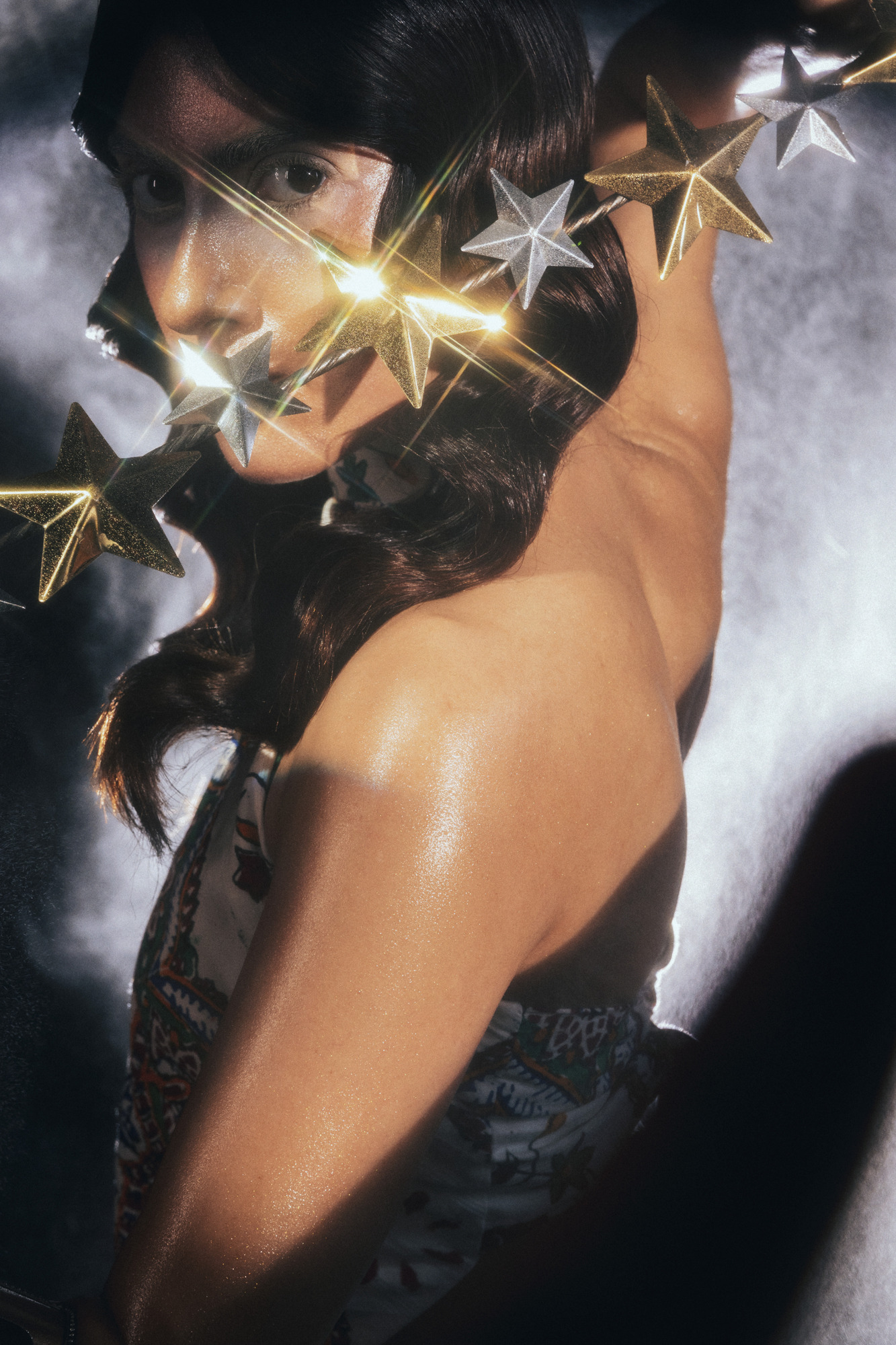
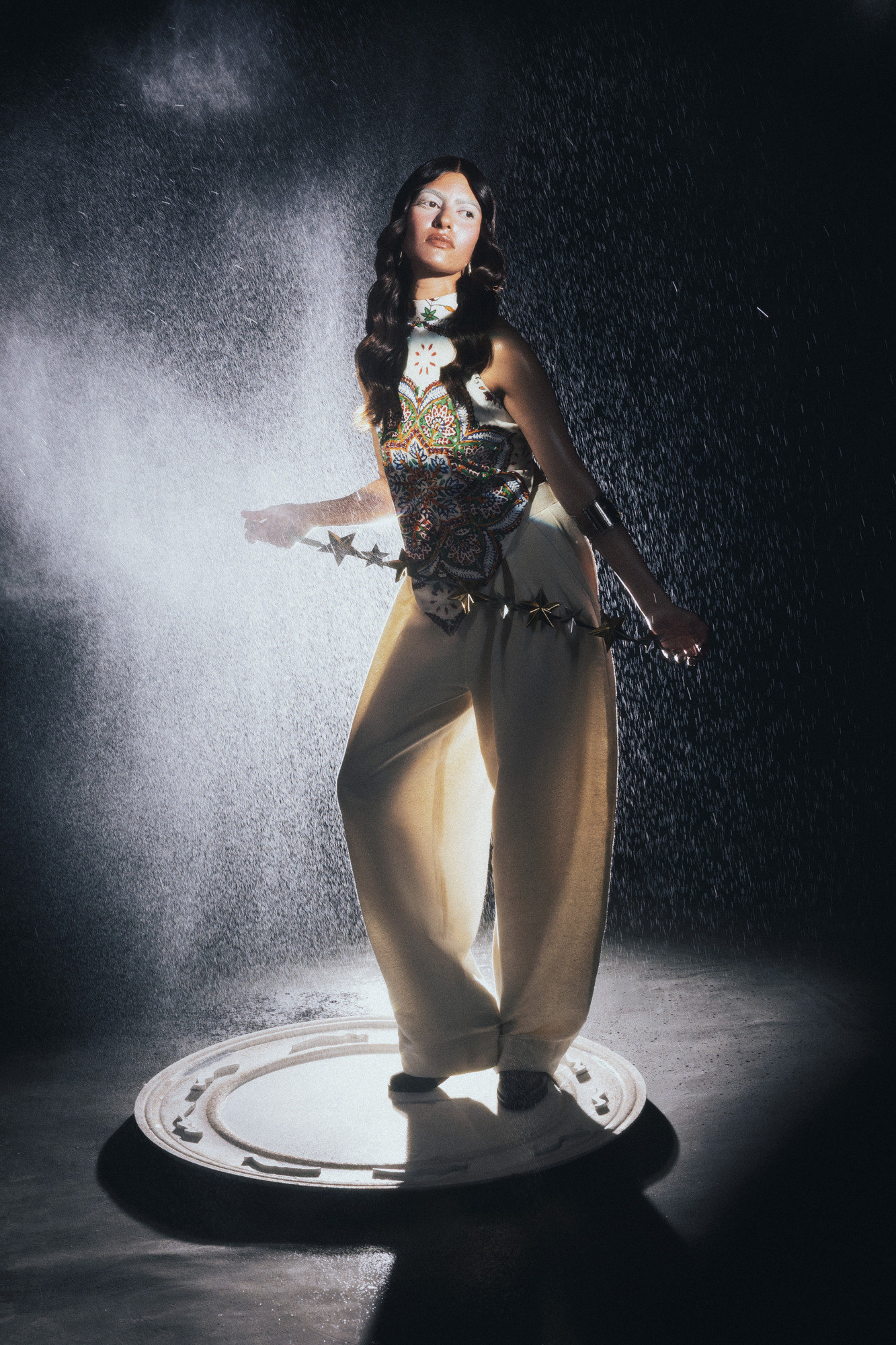
Another image is stranger still. A woman stands beneath artificial rain, her waist circled by a beaded belt of small metal stars, her feet planted on a circular platform. The scene recalls Sita’s Agni Pariksha in the Ramayana: the trial by fire through which she is made to prove her purity.
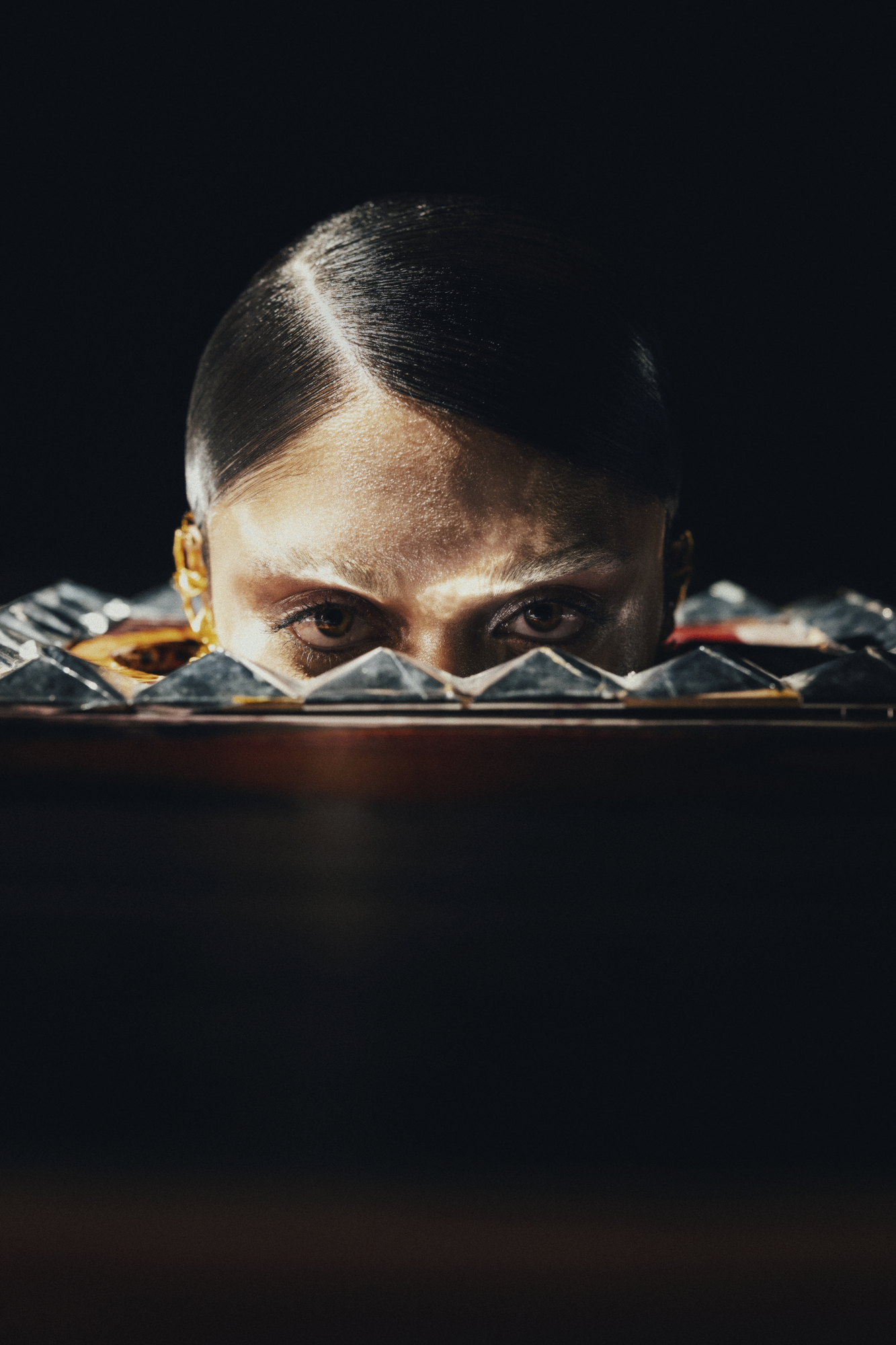
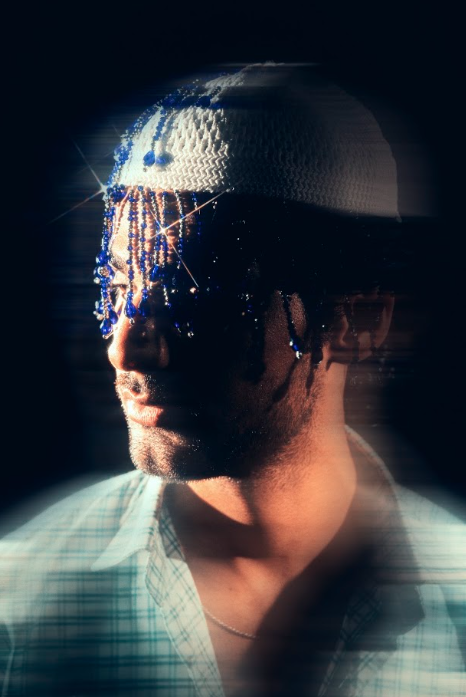
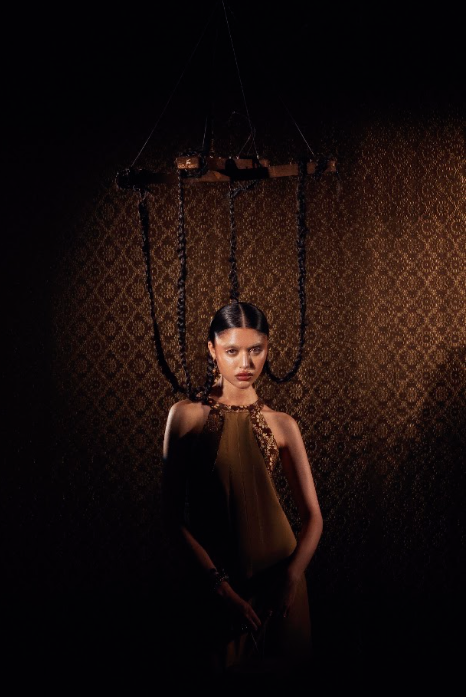
Here, fire becomes water. The ordeal remains. And then there are the eyes. In one portrait, strands of dark beads fall across a man’s face, catching the light as they obscure his gaze. Read as a veil, the gesture moves beyond the familiar association between covering and female modesty. The image leaves the question wider open: who is being watched, who learns to watch themselves, and what happens when those rules are inherited long enough to feel natural?
Domestic cloth, reworked
The materials keep Re/form grounded in ordinary life.
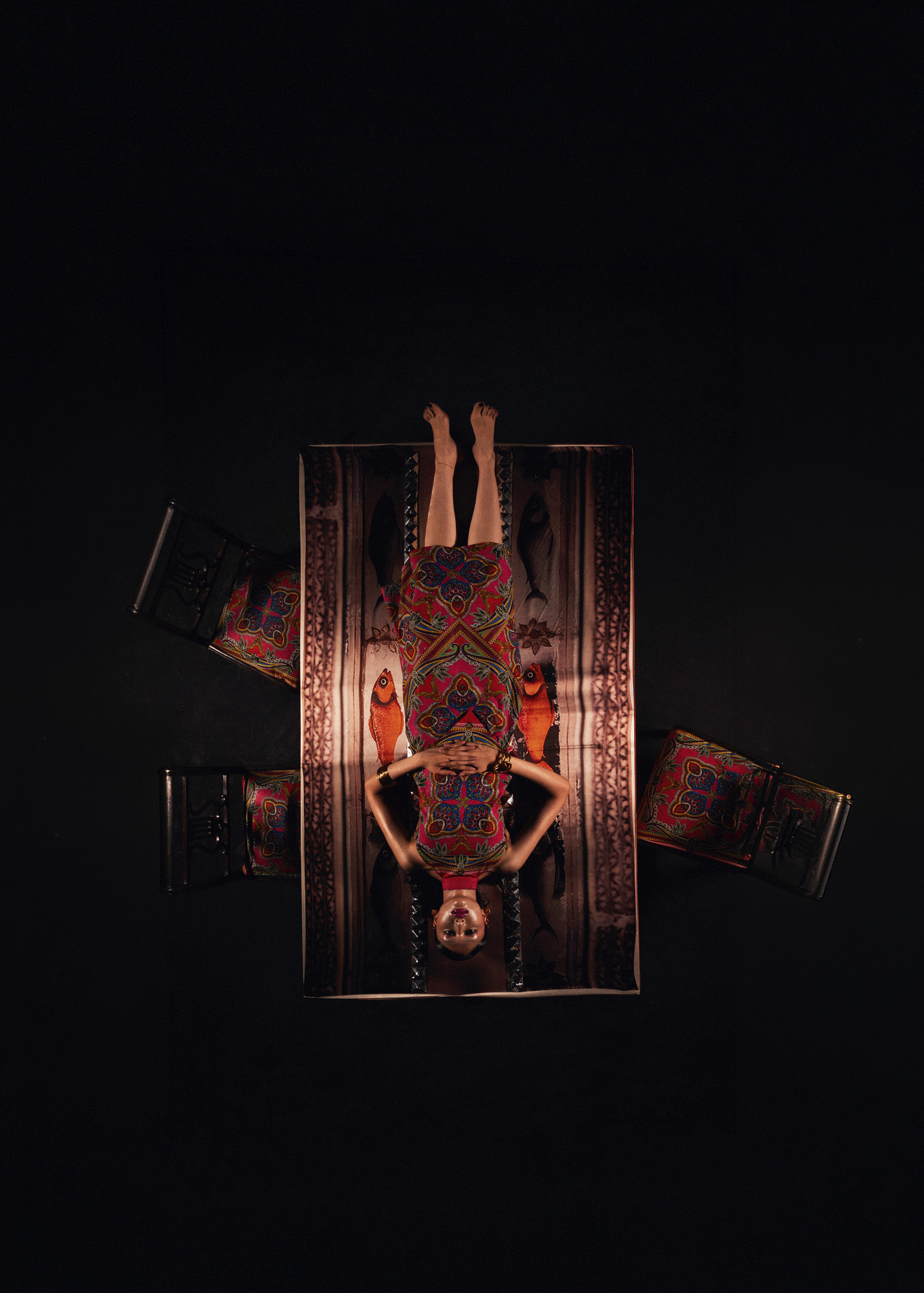
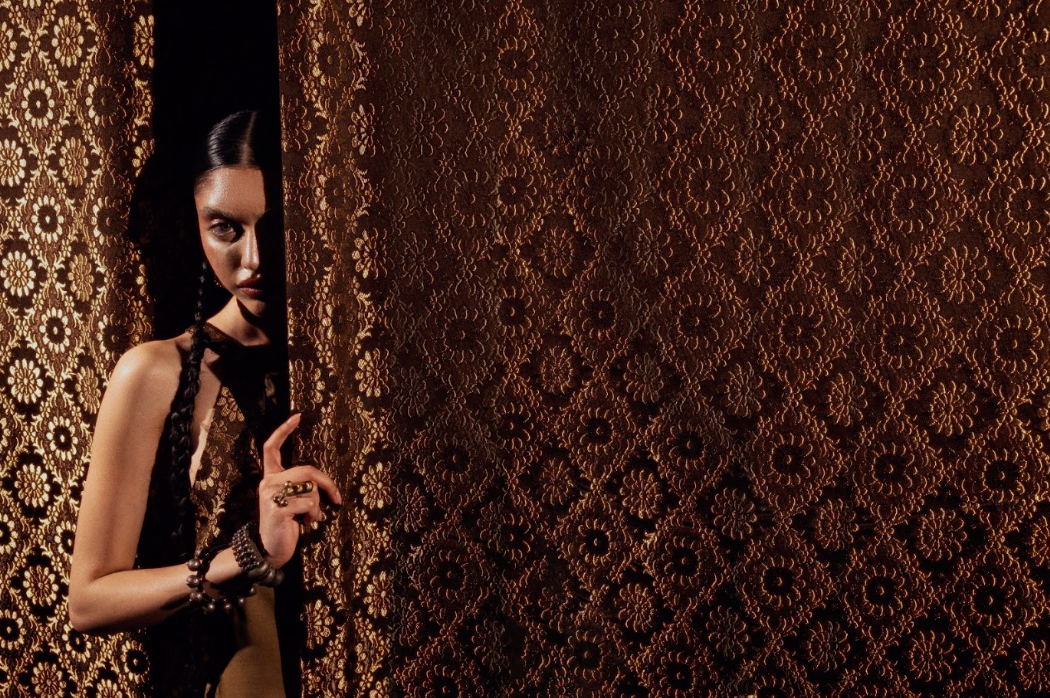
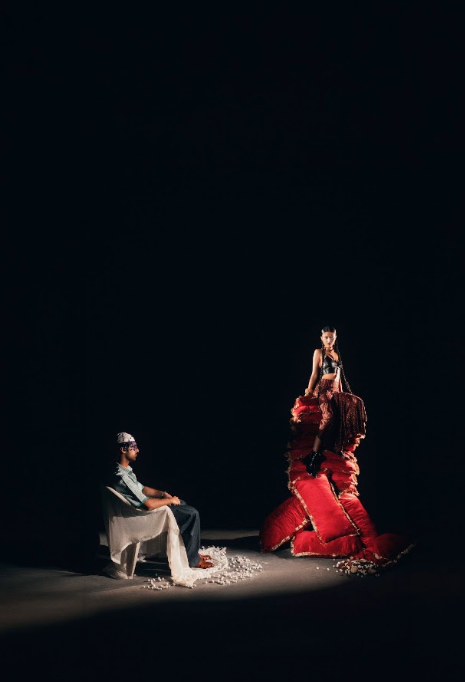
Collected XX works with utility cloth, harvest sacking, floral velvet and textiles whose histories belong as much to homes, ceremonies and everyday labour as they do to fashion. Here they become strapless dresses, tailored trousers and fringed skirts threaded with pearls. Hardware grips the waist. Soft surfaces meet rigid structures. Familiar things begin behaving strangely.
There is a temptation, when fashion deals with heritage, to make the material precious simply because it is old or handmade. Re/form is more interesting when it resists that impulse.
The cloth can remain rough. Velvet can still look like the velvet found in a family home. Straw can remain straw.
And yet the clothes are seductive. The velvet catches the light beautifully. Pearls hang from skirts. Embroidery draws the eye before its references fully register. Bodies emerge from darkness with the theatrical precision of a ceremony.
That beauty matters, because Re/form is interested in the things we inherit precisely when they do not look like restraints. The dowry trunk is still beautiful, the veil still glitters, the ceremony survives. What has changed is harder to answer.
Credits:
Brand: Collected XX
Photographer: Shahroz Hyder
Videographer: Hassaan Sajid
Models: Fariha | Sukaina Zaidi | abdurafay_
MUA: SHAINAL
Art Direction: The Backdrop | Owais Khan | Waqas Ahmed Khan
Stylist: Haiya Bokhari
Hair: Ashbeel Arshad
Project Manager: @bymariam____ | Shaheer Ahmad
Creative Direction: Nael Hafeez | Hamzah Asad
Studio & Production: AY Productions
Editorial concept note: Hamzah Asad
Follow Collected XX on:
Website | Instagram | Facebook


Nicoleta Raicu
Latest posts by Nicoleta Raicu (see all)
- Inside “Re/form”, Collected XX’s Take on Tradition - September 24, 2026
- Diana Boariu: From Behind the Lens to Between the Lines - July 30, 2026
- Exploring Loss: The Emotional Core of Mazmere’s Latest Release - July 4, 2026