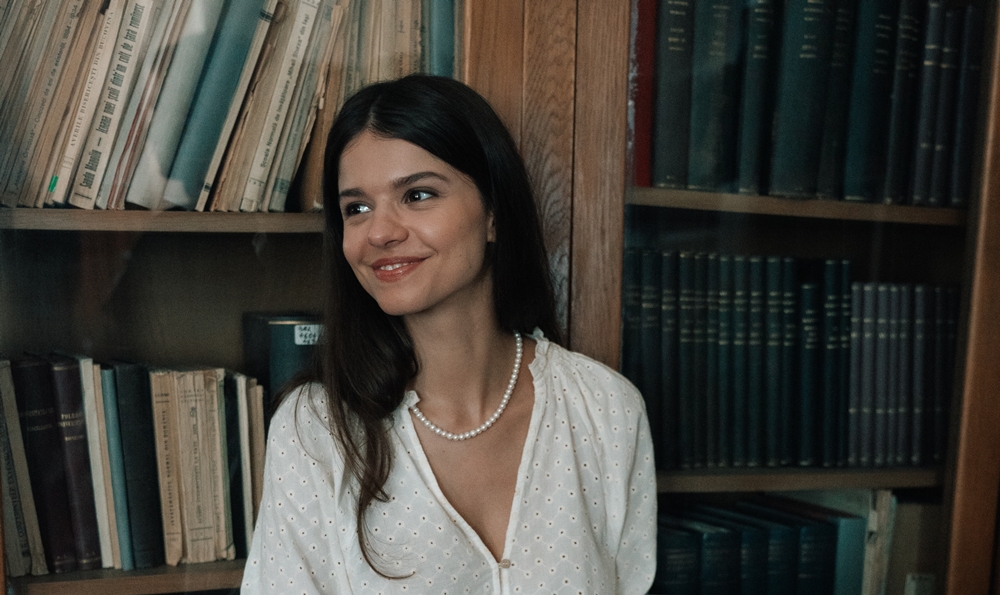
Daria Pentelie found in acting a way to move beyond the boundaries of her own experience and inhabit the emotions, contradictions and inner lives of others. From childhood performances alongside her twin sister to her first film audition, she was drawn to the possibility of inhabiting different histories, wounds and ways of seeing. In “Nothing More and Nothing Different,” directed by Lucas Neagu, that instinct takes on a particularly delicate form: Pentelie plays the younger Elena, a woman whose life will later be embodied by Ana Ciontea. Moving through the character’s youth, love and uncertainty, she had to find a version of Elena that could exist on its own while still belonging to the emotional history of the woman she eventually becomes.
The film unfolds across decades, tracing a relationship shaped by love, illness, dependency and the difficult choices that arrive when devotion meets human limitation. For Pentelie, understanding young Elena meant looking closely at the ways time, pain and experience transform the way we love and the person we become. Her approach to acting is equally rooted in observation, reason and curiosity, drawing from both Diderot’s ideas on the actor and the seemingly ordinary details of everyday life. We spoke with Daria Pentelie about creating Elena alongside Ana Ciontea, Lucas Neagu’s rehearsal process, the realities of building a life as an actor in Romania, the space that exists beyond the profession, and what she hopes people will carry with them after encountering her work.
You are part of a generation of Romanian actors whose careers are unfolding in a very different cultural landscape from the one their predecessors entered. When did acting stop feeling like an idea and start feeling like a path you genuinely wanted to pursue?
As simple as it is, probably when I earned my first money from acting and treated my friends to drinks out in town, haha. I was in my 11th grade in high school and had my first collaboration with a theater in Bucharest, soon followed by another one in my 12th grade. Silly me – thought it would always be this easy. It was only much later that I realized this profession can, one day, let you be the one to take your friends out and other times you’ll need others to take you out. Let’s say it’s all about balance. (smiles)
Before the profession, before the roles and the stage, what first drew you towards acting? Was there a particular person, performance, film, or moment that made you think: this is where I belong?
This creative aura was present since my childhood, my twin sister and I were always performing and singing in the house and our parents were very encouraging. I think we had our first commercial while being in kindergarten and I remember being really upset about having a new set of parents for an entire day of shooting.
But when it comes to important, transformative events, with a real impact, one memory that stands out is when we first performed at the Palace of Children on Children’s Day. There were costumes, choreography, an audience, the whole deal and I remember so vividly that beautiful feeling of stepping onto the stage and everything going quiet in my mind. There was stillness and a very sharp feeling of, what I now call, being present. I cherish that memory.
Another one is from when I was in 5th grade (I guess) and my mom signed me up for a film casting. My first ever audition. And while auditioning I know I was so intrigued about having to step into someone else’s thought process with entirely different decisions from my own. That is why, when they told me that if I get the part I would have to shave my head, I was so ready. Because I would have been able to tell someone else’s story and put myself aside.
So…I think that was the moment when I knew I want to tell stories of other people, with different backgrounds, wounds, memories and experiences.
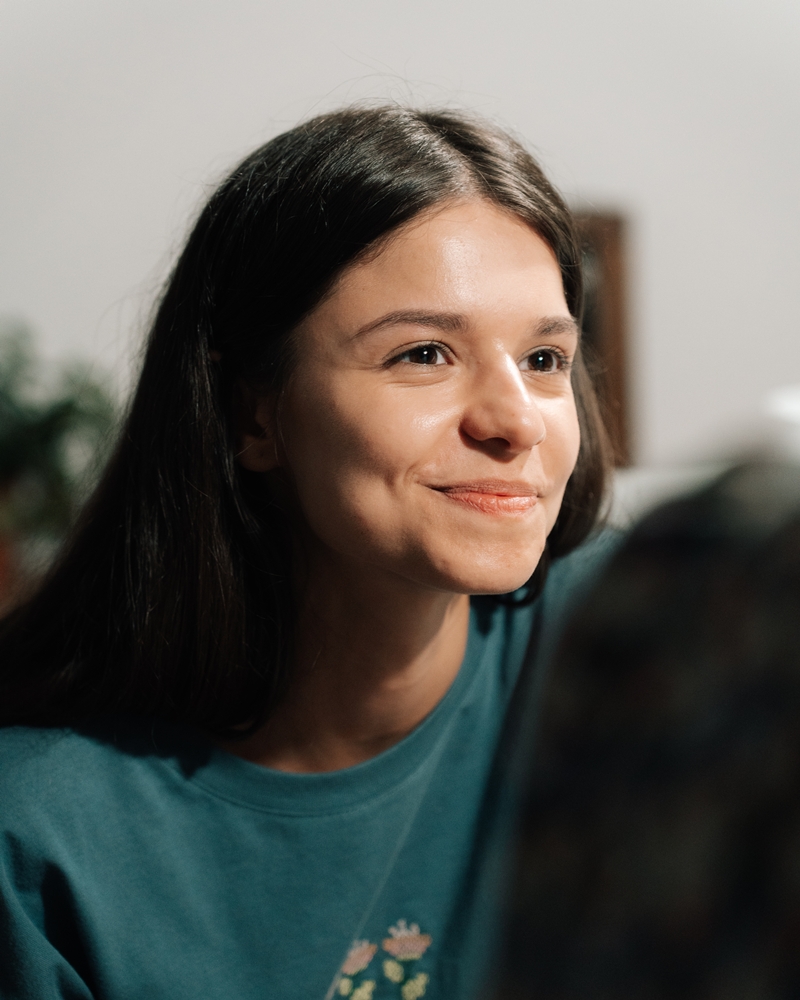
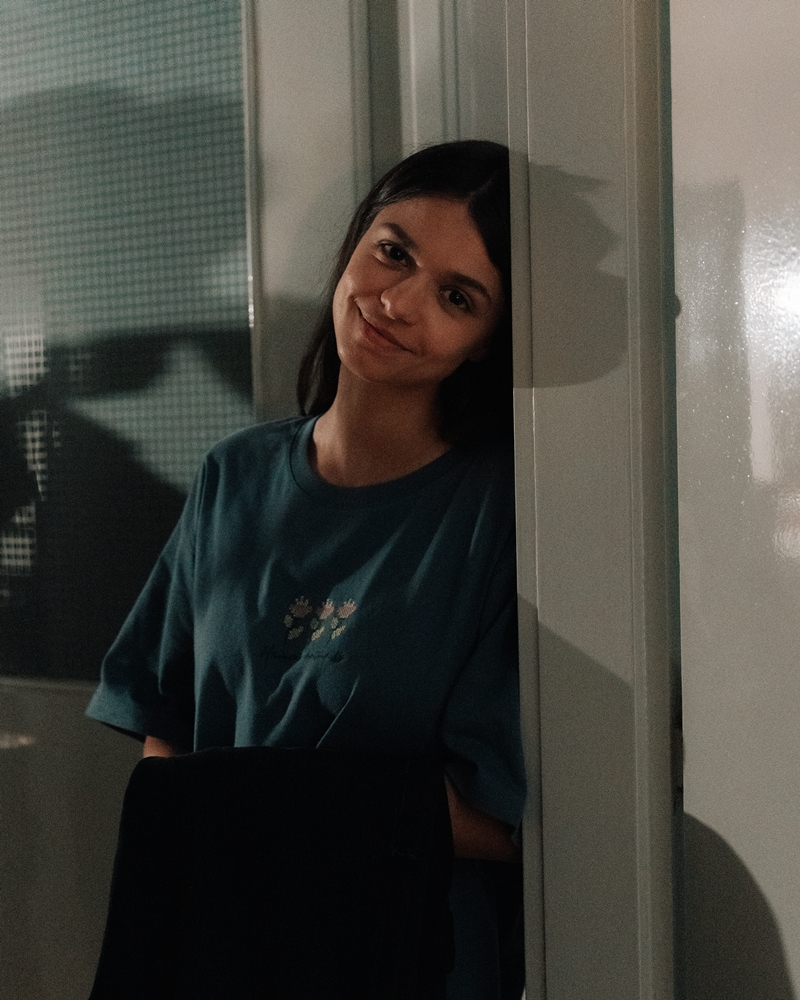
What continues to feed your imagination today? Has the source of your inspiration changed since you first started acting?
What inspires me and always will are people and their day-to-day life that may seem simple at first glance, but which in fact it’s so particular and unexpected. I continue to pay close attention to the reactions around me and I’m genuinely curious how people experience things throughout their day. Because, essentially, the starting point for everything that eventually takes shape on film or on stage it’s life itself. Therefore, I don’t think my source of inspiration has changed, but instead my way of understanding all these layers has, because I notice new nuances, new meanings, reasons and I don’t judge, but instead, I try to understand deeply.
In “Nothing More and Nothing Different” you play the younger Elena, a character who later exists through Ana Ciontea’s performance. How do you approach the strange responsibility of creating a younger version of someone whose older self already has such a distinct physical and emotional identity?
If I had approached the situation that way, I think I would have just shut down and started judging myself, putting way too many limits on myself. So instead, I focused on honoring the story as best as I could and just trusting Lucas’ direction. I admire Ana Ciontea and it was a joy every time we shared the set together. She’s such a sweet person.
Did you and Ana Ciontea consciously search for common gestures, rhythms or details, or did you prefer to arrive at the character independently and let the connection emerge naturally?
Life shapes us regardless and we end up changing from year to year, let alone how intense we burn in youth, compared to the inner rhythm we have when we grow old. The challenges, the unexpected and the joys we encounter leave their mark. Even the way we love can change – how generously or how guardedly we offer it to others in time. Thus, I think what we tried to illustrate is how each version of Elena (young or old) relates strictly to the context she finds herself in at that moment.
But, on a lighter note, I think both versions of Elena have big warm eyes, filled with love, light and hope. (smiles)
Lucas Neagu has spoken about the trust and extensive rehearsals that shaped the young core of the film. What did that rehearsal process unlock for you that you perhaps could not have reached on set?
First thing that comes to mind (and I think many will empathize with this) is the relaxation of having enough time – time to try, to test, to make mistakes, to start over- because, as we well know that, on set you don’t always have that. We also bonded on so many other things, we watched movies and debated, we attended a concert, we talked about the script and how can we improve it, about the characters and the timeline for each one of them. It felt like an intensive and creative summer camp and I think it’s a core memory for all of us.
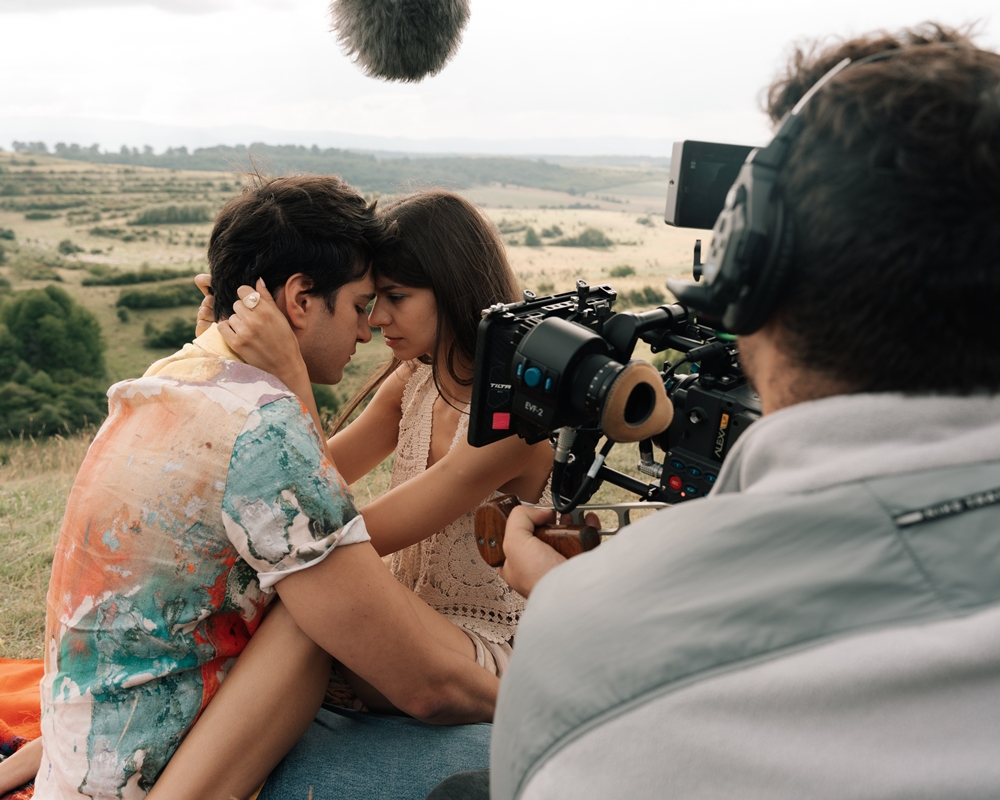
“Nothing More and Nothing Different” moves through several decades of Elena and Gabi’s relationship. What did you discover about young Elena while trying to understand the woman she eventually becomes?
She wants exactly what we all want – a love that’s deep, honest and mature. But she’s young and she makes mistakes and runs away when she sees so much pain and illness and death around her. Because I truly believe she hasn’t learned yet how to be there for someone, how to be others’ rock at that point in her life, so she chooses herself over someone else. But time has its funny way of shaping us, of maturing us. And love does the same and if you are fortunate enough to discover it, it transforms you and teaches you to grow alongside it.
The film deals with terminal illness, devotion, dependency and the moral limits of unconditional love. As an actor, how do you enter such emotionally difficult territory without allowing the character’s pain to consume your own emotional space?
I think Diderot said it better than I will. I studied his work Paradox of the Actor back in school and there he wrote about how a great actor must be guided by reason and judgment, rather than by feelings and emotions. He also said that you should use your wounds and sufferings in art only after they have healed, so that you can blend affective memory with imagination. That is why actors should be great observers of the endless riches of nature, instead of always using their own riches that can quickly run dry.
Romanian cinema has produced an extraordinary number of films that travel internationally, yet the domestic film market remains a complicated ecosystem. What, in your view, actually makes a Romanian film successful at home today?
I remember once walking out of the movie theater and saying “I want my money and my time back”, then, a few days later, I ran into someone who told me about the exact same film “wow, I’d go see it again”. And it was not even that “arthouse vs commercial movie” type of situation (because that’s another story), it was just as the saying goes, “there are as many opinions as there are people”.
But you know, because I mentioned that antagonism, “arthouse vs commercial”, I think that when it comes to art films, when there’s validation from outside (and here I talk about international film festivals), often the reaction is something like “I must see it. And for sure I must like it”. And if you don’t, you feel frustrated. And that shouldn’t be the case. I really do think that not every art film is the greatest of the greatest, as not all commercial movies are the worst of them all.
And what does a “successful actor” mean in Romania? Is it visibility, major film roles, a permanent place in a theatre company, financial stability, artistic recognition or something much less measurable?
Here’s my take on this matter: an actor’s “success” isn’t theirs to declare. Sure, a place in a theater company, visibility, having major roles in films, all of these are convenient because they are countable, but there are still plenty of people with impressive résumés that are not considered “successful”, while others with less “measurable” careers are considered the ones who actually made it. I think that’s the strangest and most humbling part of this industry. This “successful actor” status is not a personal “achievement”, it’s more like a label handed to you by others and the only thing that is in your control is to train enough, audition enough and show up enough out there.
There is often a romantic idea that actors live entirely through their art. How close is that idea to reality? Can a young actor realistically build a sustainable life from acting alone in Romania?
Generally speaking, no. If we’re talking about specific cases, we could say yes. Or maybe. The answer to your question takes me back to what I said in the beginning, that it’s an unpredictable field to work in, where today you’re working, tomorrow you’re waiting for the phone to ring. As I grew old and my needs, desires and necessities changed, I realized that I don’t think I can keep up forever to this inconsistency. I think it’s hard. I really believe that. I don’t want to sacrifice my mental health in the name of “art”. The romanticized idea that you have to suffer “for art” is often toxic and not a real condition for creativity.
If you suddenly had a year with no auditions, no rehearsals and no performances, what would you fill it with? Who would you become when acting temporarily disappears from the equation?
(laughs) I’ve actually experienced this type of periods in my career, maybe not for a year, but for several months for sure. And when these periods arrive, surprisingly, I tend to step outside my main field of interest and surround myself with people from completely different domains, with different passions, different vocabularies, different obsessions. And I remember once again: “hey, there’s still life outside our bubble”. There are so many fascinating areas to explore, hobbies to discover, places to go, podcasts to listen to and that is exactly the point of doing this, to go back to work with a fresh mind and fresh ideas.
What is something completely unrelated to acting that you are obsessively curious about at the moment?
Cooking, puzzles, vocal lessons. I always come back to these and they fill me with joy. When I cook I always try to understand the best possible combination of flavours, while also trying to discover the surprising bold ones, how to enhance the intensity of some spices or how to reduce it. It’s always trial and error and it’s fun. And with singing, I try to know my vocal limits and push past them. I always ask myself how certain performers approach it and how can I get there too?
When you imagine yourself decades from now, what would you like to feel you left behind, a body of work, certain people who remember you, a particular way of seeing the world, or something else entirely?
It would be nice to know that people would stick with a warm and fuzzy feeling, like they just got a hug. Because what stays with us most is how someone made us feel.
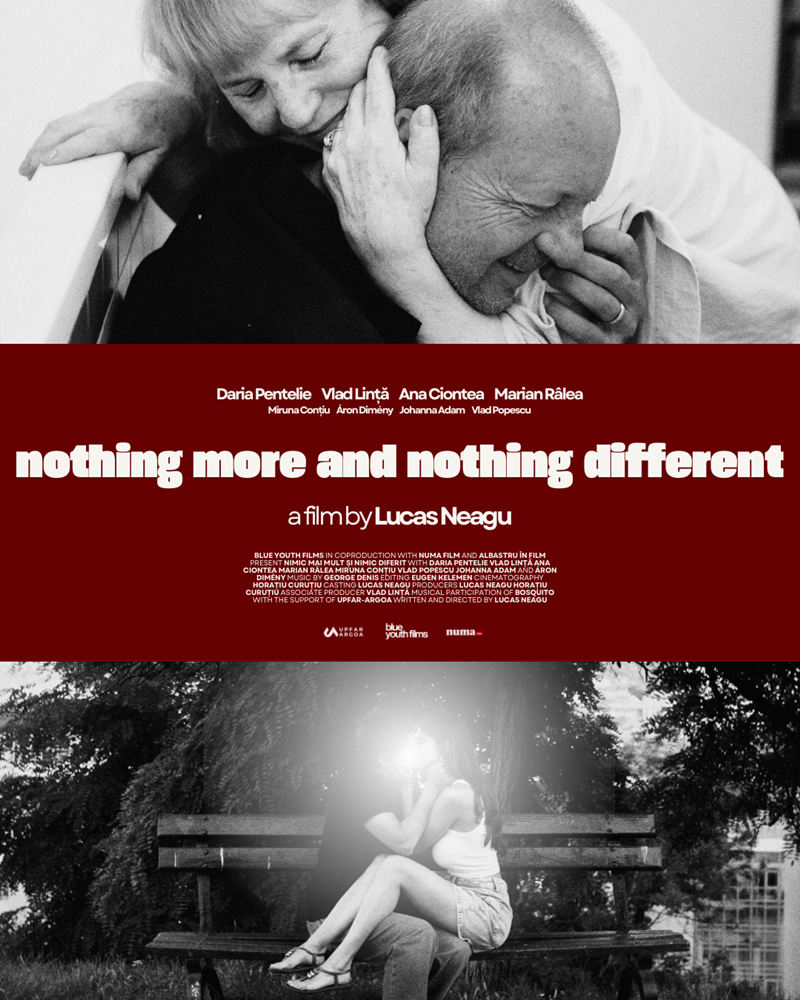
Lucas Neagu’s “Nothing More and Nothing Different” is set to premiere in cinemas across Romania this November, inviting audiences into an intimate story about love, family, mortality and the difficult boundaries between them.
Follow Daria Pentelie on:
Instagram
Photos: (c) Antonia Budeanu

Nicolae Baldovin
Latest posts by Nicolae Baldovin (see all)
- “…And Out Comes the Wolf” Brings ’90s Punk to the Big Screen - October 13, 2026
- Awe Inspired Summons Mythology for “Nocturne” - September 29, 2026
- Johnny Depp’s “Day Drinker” Just Got Its First Trailer - September 29, 2026